Showing posts with label Disturbing. Show all posts

Friday, February 19, 2016

#759: The Confession

(Costa-Gavras, 1970)

This is usually not the place to discuss current entertainment news, let alone political news. But watching Costa-Gavras's deeply disturbing and intense film has clear implications for what's happening in the world today both generally and within the United States. The now decades-long debate in this country over torture and its benefits or lack thereof represents an extreme abandoning of the lessons of the past and America's dedication to at least ostensibly projecting an image of moral authority in the world.

Like any good film that attempts to tell the complex and unflinching truth, what you take from The Confession will likely be informed by your worldview. For conservatives, this is likely to be seen as a takedown of the socialist satellites of the USSR and by extension a rejection of the underpinning communist philosophy. As a work of art, this would be a largely useless piece of propaganda that would have outlived its usefulness three decades ago. For people who are more generally cautious of institutional power (a group to which Costa-Cavras himself undoubtedly belongs considering his decades-long stretch of career choices), The Confession is much more universal, and presents a harrowing argument against coercion as a tool in law enforcement. That said, I do think there is a strong anti-communist message here, though it's one that isn't necessarily shared by the director. Costa-Gavras simply tells the truth in The Confession, but his final moments end on a call for Lenin to rescue his movement from the evils that transpired in its wake. I'm not sure Lenin (or anyone) could help, for the very nature of the system created in Russia guaranteed corruption of power - after all, it's not capitalism or communism or any other political system that owns the darker side of human instinct, and only an open society can root out the ill-willed forces that would threaten to destroy it.

It's this larger point that goes beyond interrogation methods and torture that seems more important to me at this stage in history. Maybe I just thought of the comparison because the news is happening right now, but The Confession reminded me most of the battle Apple is currently fighting to keep its operating system secure. Although smart phones may be just a momentary blip in technological terms, their current dominance means that they represent the greatest threat to authoritarian governments today. Giving these governments access to any phone they wanted would mean that criminals would also have access to them, for sure, but even more importantly it would mean that dissidents and political fighters would need to go elsewhere for security. The Confession does not have any direct implications in this regard (even home computers were unheard of when it was made) but it does highlight the damage that can be inflicted on people when their government is given total control over their lives. Although the torture sequence that takes up the bulk of the first half of the movie is intense enough, it's the second half that highlights this terrifying truth, making it equally if not more disturbing.

Of course, I haven't discussed the movie much, but instigating political discussion (and ideally action) is largely the purpose of Costa-Gavras's films. Though he is a very cinematic and technically sound director, his main focus is using the medium to get a political response. The Confession was added to the Collection along with its follow-up State of Siege, which I have yet to see. But it also joins two masterpieces already included, Z and Missing, similarly political thrillers. While I don't think The Confession is quite as good as those two films, it's more universal than either, ironically because the journey is so personal and hyper-specific. I don't know that I've ever seen a better indictment of torture, and the film's complex depiction of the state's manipulation will sadly resonate even as the USSR grows more distant in the rearview mirror of history.

Sunday, October 20, 2013

#663: Shoah

(Claude Lanzmann, 1985)

[There are a number of times during Shoah when an interviewee says there are no words to describe their experience. Although it is crude to compare watching a movie to what these people witness in their lives, there are truly no words to describe Shoah. It is both one of the truest representations of cinema and undoubtedly the most harrowing and life-altering film I have ever seen. There is no other film with which to compare it. There is, perhaps, no other film. Some thoughts, messy and honest:]

It took me nearly a month to watch all of Shoah. Part of this is my busy schedule and the film's nearly ten hour running time, but most of it is the need to fully digest and attempt to comprehend each section of the movie. As it moved deeper into its narrative, it became more and more difficult for me to process. There were moments when I stopped paying attention because the emotions were overwhelming. Other sections I rewatched because they were so dense and perspective-altering.

Shoah is a reminder that horror movies are made to understand our deepest fears, while documentaries about horrors are meant to destabilize those same fears. Nightmare on Elm Street is therapy and Irreversible is abuse, but both of these things are comfort, in a way. Shoah is uncertainty in the form of truth. It's the electron knocked out of its orbit, hurtling towards us.

I've never been to Germany, though my last name is German, from a family that emigrated in the 1850s. In some ways, Lanzmann paints a more damning picture of Poland, though his account is extremely controversial and should be balanced by the knowledge of how many Christian Polish people died during the war, often fighting what they knew was a losing battle. But it is Germany that is stained by the Holocaust, and the German people - many of whom had no idea what was going on - who must live with it until there is no longer a Germany. I don't think I could ever go to Germany after having seen Shoah. I don't really think there should be a Germany any more to go to.

Many of the key people Lanzmann interviews in the film are now dead. Lanzmann interviewed them in the 70s, just 30 years after the events they describe. It is horrifying to me that the 70s were just three decades after the Holocaust. It fills me with great sadness to think that the men and women who can tell us first-hand what happened will soon all be gone from this Earth. I want them to have peace, I want the pain to be gone from their eyes. I want them to live forever, though. I don't want anyone else to tell their stories but them.

Fuck Saló.

My maternal grandparents were 20-something American Jews when they found out about the Holocaust. My grandfather fought in Europe, spending time in France and Italy, mostly. I don't know if it matters that you are Jewish - maybe if you had family in Europe that was killed or barely survived like they did it meant more to you. I like to think it didn't, but it's hard to find the kind of impact the Holocaust should have had in American culture in the late 40s. Sometimes it's hard for me to believe there was any culture.

I lived through 9/11, like we all did, only I was a little closer than most and still miles away. I lived just below Canal St. and watched both towers fall. I saw people walking up the streets covered with soot and dust, some with minor injuries that were ripples from the tidal wave that hit the bottom of the island. Rumors swirled of more attacks and we all wondered what could possibly happen next. I say this because we all try to take our own experiences and feel like we can relate to the stories we hear. The fear and confusion I felt that day and in the subsequent weeks is my own, but I am ashamed of it. I have lived a life of privilege. We all have.

Perhaps the most harrowing section of the film is a letter that ends the first half in which problems with the vans that were being used to commit mass murder are laid out in bland bureaucratic prose, referring to the Jews as the "merchandise." It's a chilling inadvertent commentary on any system's ability to normalize the ultimate horrors through political language and mental separation. The letter was written by Walter Rauff, a Nazi whom many consider to be responsible for the murder of 100,000 Jews. He also allegedly worked with Israel after the war as a secret agent meant to foment unrest among the new country's neighboring enemies. When his mission failed, the Israeli secret service helped him escape capture and flee to South America, where he worked with Pinochet and died of lung cancer in the 1980s. This kind of self-serving purposeful dismissal of justice is almost as horrific as the crimes of which Rauff was accused.

Although the bulk of the film's information comes from spoken words, like all pure cinema you don't need the sound to understand the full impact. There are essentially three images in Shoah. The most common is not human, but is instead the scene of the crime, as one understated synopsis put it. The camera winds its way through contemporary Europe, spending most of its time in the overgrown ruins of the camps themselves. Unlike Night and Fog, shot twenty years earlier and whose poetic and haunting exploration of the camps is in no way rendered obsolete by this definitive work, Shoah is shot in a workmanlike manner that dwells on the natural elements of the ruins' surroundings. Lanzmann has no interest in telling you what it was like to be in the camps by showing you this footage. He is binding all of us on Earth to them through common signifiers. It's a constant reminder that this happened, not in a place but to humanity, perhaps if one is inclined in front of God, surrounded by Him. The second image in Shoah is of the complicit, the Polish citizens who stood by and watched and the German SS and bureaucrats who were at best willfully ignorant. Some of these people are unrepentant and soulless, content to rattle off facts as if their testimony absolves them. Most, however, are at war within themselves, desperate to justify their inaction even when it was clearly justified and they really were powerless to help. These people are us, and we must reconcile that knowledge with who we believe we are today. The third image is the survivor, and this is the image one will never forget. The stories in Shoah are unlike any you have heard before, but the look in the eyes of these men and women is indescribable. If there is one feeling they all have, it is guilt. I think most Holocaust survivors would reject being called victims, even though the horrors they went through and must live with are incomprehensible. They are survivors because someone else died in their place and there was nothing they could do about it. They are at their most emotional when they plead with Lanzmann to understand that there was nothing they could do, even if what they did do was more than any of us could have. They do not cry for themselves, but for their families, for strangers.

Lanzmann is a controversial figure, particularly in Poland where the film was denounced as an attack on the Polish people that omitted much of the hardship and tragedy that country suffered at the hands of the Nazis. Certainly, if you only watched the film and knew nothing else of World War II history, the depiction of Warsaw in the final sequence of the film would lead you to believe that things were normal and sunny for the non-Jewish population. Yet Lanzmann's forceful perspective on the Holocaust is essential to his telling of the story. His anger and disgust is present in his interviews with SS members, while his aggression towards the Polish who in some ways benefitted from the deportation of the Jews is evident and sometimes feels illogical and unfair. But without this emotion the film would feel dead and the story would not have nearly as much impact because there would be nothing with which to engage. Telling the story of a grand tragedy without a perspective is an act of cowardice. Lanzmann knew that.

I don't think most people know that the Nazis kept their industrial-scale mass murder of the Jews secret from even high-ranking members of the SS. Many people chose to turn a blind eye, for sure, but there were undoubtedly many who honestly had no idea of what was being done in their name. As explained by the only historian in Shoah, the reason this was so easy to do was that every other thing done to the Jews by the Nazis was old hat in Europe. Basically anything up to the actual "final solution" had been done before, so most Europeans basically said "Here we go again." Perhaps more difficult to conceive of is what he indicates that this means - up until this point, the Nazi bureaucrats did not need to make their personal mark on what they were being asked to do. It was only when they were asked to commit the greatest organized crime against humanity perhaps in history that they needed to think outside the box. Because the secret needed to be kept, nothing could be detailed in communication from the leaders to the field, which meant they were somewhat on their own. The Holocaust was, in essence, a triumph of middle management.

Everyone should see Shoah, but don't ever see Shoah. It's a terrible truth that once it's known you can't forget. It's history made eternally relevant, a social service that is invaluable. It's hopefully something we'll never need, but it's vital to have it on reserve. It's also a living thing, cinema that sinks into you even in its most static, uncinematic moments. Roger Ebert said it shouldn't be judged against other movies and vice versa, and I know exactly what he means. As a film, it would rank with the greatest ever made. But there are no films to rank it with. There is only Shoah.

Saturday, February 23, 2013

#17: Salò

(Pier Paolo Pasolini, 1975)

There is a truly harrowing moment in Salo, but it's not any of the moments often cited as difficult to watch. Unlike those scenes, it doesn't involve excrement, knives, or gruesome torture. Instead, a handful of victims is found to be in violation of the rules and, rather than deal with their inevitable punishment, they rat out other victims for breaking the rules. They do this even most likely fully aware that it will not save them, but in a last ditch attempt to have power over someone else in the way they themselves have already been dominated.

Salò is undoubtedly the most notorious film in the Criterion Collection, and arguably the most notorious film made by a serious filmmaker in the history of cinema. Watching the film is a rite of passage into that most daring (and insignificant) group of cineastes who are willing to go the extra mile to satisfy the urge to complete their cinematic education. It's also sought-out by viewers with a thirst for the extreme, those who would group it in with The Human Centipede and Cannibal Holocaust as a graphic ordeal that is unafraid to explore the limits of exploitation and extreme violence.

Though I understand the latter group, I generally reject the appeal of that sort of movie, so, apart from simply wanting to have a fully finished list of Criterion movies with no cheating, any desire I would have to see the film would stem from my allegiance to the former group. Either way, I think both groups would and should be dissatisfied with Salò. As a film, I don't think it's especially impressive, and as a piece of horror-slanted torture porn, it's rather awkward. Salò neither delivers a compelling political or cinematic case for its existence, nor treats its most disgusting and shocking moments with enough reckless abandon for horror fans to enjoy it. The lack of story, the disappointing way in which homosexuality is treated (especially infuriating since Pasolini himself was gay), and the thin line between the horrors of fascism being exposed and the thrill of fascism being glorified makes the film a somewhat meaningless viewing.

Still, the enormous reputation of the film, combined with my own long journey toward viewing it (or even being ready to view it) seems to demand an evaluation. Like so many visceral films, Salò must be evaluated on two separate levels: the experience of watching it, and what is actually on the screen. Pasolini's most beautiful shots (essentially all of which come in the first half of the film) can not conceal the emotional dread this beauty invokes simply because we know what's going to come next. Similarly, the repulsion that is unavoidable in what Pasolini so accurately dubs "the circle of shit" cannot be overlooked when attempting to place these moments in a political context. Without fully bisecting the two, I'd like to address them separately.

As an emotional experience, Salò will tell you a lot about your relationship with movies, specifically violent movies. Nearly 40 years on, the film has lost little of its power to repulse audiences, but the film is not nearly as shocking as it must have been at the time. If anything, Salò is a reminder of how low we've sunk - regardless of your opinion of the film, you have to assume Pasolini was saying something here, even if it was just to elicit some sort of response. The most violent movies today (e.g. Saw, Texas Chainsaw, the above-mentioned Human Centipede) are created for the passive viewer in hyper-aggressive ways. Salò, for better of worse, toys with your feelings. Movies today assume you have none, and are in it for the kicks. Would anything here truly be above being used almost exactly in a contemporary horror film geared at squirming teenagers and their dates? The final horrific torture scene, in which victims are tied to stakes with every limb, seems to have been transposed directly for use in The General's Daughter, a procedural crime film starring John Travolta which made over $100 million at the box office with hardly a peep from offended parties.

On a personal level, much of your ability to stomach the film will depend on how easy it is for you to separate what is on screen from the reality of the production. For some viewers, the fact that what is being done to these human beings is not real, that they did not suffer, and that the poop is most likely chocolate is no consolation, and those people really have no business watching the film. Without this ability, I can only imagine what seeing this movie would be like. And yet, with this ability, I fail to see the worth in seeing these things done. Am I supposed to be proud of myself for being able to stomach reenactments of the true horrors humanity can inflict on one another? Perhaps I am supposed to internalize the violence to ensure that I will treat real acts of a similar nature with more gravity? Neither self-congratulation nor humility seems worth the experience - one is an intellectual circle jerk, the other, preaching to the choir.

Technically, Salò is an extremely well-made film. Pasolini only made films for a decade and a half, but his chops were already on full view in Mamma Roma, and this film, made a decade later, shows his maturity and steady hand. His musical juxtapositions might come off as too obviously ironic, but the classical framing during the story telling and the near-documentary style of the opening sequence in which the victims are rounded up seems absolutely essential to presenting what comes afterwards with the necessary weight. Of course, some shots do seem entirely designed to disgust for the sake of being disgusting (a certain close up of an unappetizing dish being the most obvious), and moments like these reminded me of the wasted talents of directors like Gaspar Noe and often Michael Haneke. There is certainly a "sound and fury" effect to Pasolini's films when viewed from outside of the cultural context against which Pasolini believed he was raging (and which arguably did him in). Furthermore, the narrative is so simple, the characters so spare, and the philosophical discussions so haphazard, that any knowledge of where to put the camera becomes irrelevant pretty fast.

Beyond the actual process of watching the film, Pasolini's political take on the film seems to be dependent upon how seriously he intended to connect his fascist antagonists with his modern day "neo capitalist" targets, and whether the shots fired were intended to be directed specifically at them or were instead meant to be all-consuming. Fascism has become such an easy target that any rejection of its supporters feels like beating a dead horse, but even if Pasolini had used some other example it wouldn't have changed much - this isn't exactly a subtle film. But if the argument becomes whether or not Pasolini intended to express a counter-philosophy or simple nihilism, the film makes for a more interesting jumping off point.

Inevitably, that discussion must come back to that moment when victim turns on victim. This seems to me to be the heart of the film (if it can have a heart), and challenges the simplistic construct of the narrative to make a more complex point about humanity. But there is a second moment which demands evaluation: the pianist's suicide. This character, hardly noticed before her final moment, is the clearest stand-in for the viewer, not necessarily in their role as a viewer (after all, this position is taken much more clearly by the fascists as they sit with binoculars and view the torture below), but in their role in society, serving the powers that be as they stand by allowing evil to continue. From this perspective, her fate can be taken in two ways: surrendering to the inevitability of the evils she has just witnessed, or rebelling against that evil in the only way she could manage to assure they would no longer control her. I honestly can't say what Pasolini's intention was in this scene, but it does read to me as the most important scene in the film, and I am somewhat surprised it is not discussed more frequently when Salò is considered. Of course, it is quite possible Pasolini simply intended to show one more shitty thing, which leads us back to the great mystery of the film.

I've written a lot about Salò at this point, somewhat ironically despite the fact that I ultimately don't think the film is worth intense examination. Perhaps assuming many viewers would feel the same, Criterion has included more essays in this release than in any other release I can recall. None of these really changed my mind about the worth of viewing Salò, although Catherine Breillat's essay is a wild ride. I think the thing I will remember most about the experience of seeing this film is the impossibility of meeting expectations. No film is as horrifying as your imagination can make it seem, none is so explosive as its reputation (although House really is that weird). This renders shock cinema somewhat impotent. Removed from its notoriety, the fact that film is banned in multiple countries, has horrified numerous unsuspecting filmgoers, and maintains a reputation as the most daring and disturbing film ever made, Salò is a mean little movie that says a lot more about its creator than it does about society. You already know if you can stomach Salò or not, the question is, should you really even bother?

Friday, November 16, 2012

#223: Maitresse

(Barbet Schroeder, 1976)

The fact that Maîtresse is a love story will be cold comfort to viewers watching a woman nail a man's penis to a 2x4. But it's true: Maîtresse at its heart is about two people falling in love and their desperate attempts to merge their worlds and come to terms with their differences - which it turns out in the end might not be all that great. Like In the Realm of the Senses, made just a few years later, Maîtresse focuses on two people almost exclusively as they become obsessed with one another. But where that film's couple took their obsession down a dangerous path, the two lovers here lead a very conventional life both in bed and out. You know, other than the pull-away coffee table in her living room that leads into the S&M dungeon where she abuses high-end clients by whipping them, keeping them in cages, and, yes, nailing their penises to boards.

Other than that one truly excruciating scene, the sadomasochism in Maîtresse is actually pretty mesmerizing and entertaining (though fair warning: there is also a very gruesome scene of a horse being shot and then bled out). This is perhaps most true when the couple arrives at a chateau in the countryside where a butler - who is clearly in reality the owner of the chateau - greets them and proceeds to take an enormous amount of shit from the woman, including having a cigarette put out in his hand. The scene shows how unique Maîtresse is, and how willing and even excited Schroeder is to open his viewer up to a seedy underworld all around us. The fact that the film doesn't feel the least bit exploitative about its subject speaks to the care with which he made the film.

I enjoyed Maîtresse a great deal despite its quite difficult-to-watch moments. But I'm not sure the movie says much of anything beyond presenting the novelty of its subject, one that is rarely approached in a serious way in popular culture. Gerard Depardieu, in a very early role for him, is also excellent here, another thing that makes the movie worth watching. Even though Criterion maintains their level of quality in releases like this, though, there does seem to be a weird undercurrent of films about sex that merit more consideration from them than they might otherwise get. I'm not saying Maîtresse doesn't deserve its release - this is probably a near-classic movie. I just wonder if there's something more to it - perhaps they see films like this, their recent Trilogy of Life boxset, and In the Realm of the Senses as works that might not otherwise get the serious consideration they deserve because they are overshadowed by their reputations as sex films.

By the way - what gives on the date here? Criterion has it pegged as 1973 on its website but their own essay says the film was shot in 1976, the year it was distributed internationally, while IMDB has it as 1975. Anyone have any idea when it was actually made?

a

Tuesday, November 13, 2012

#182: Straw Dogs

(Sam Peckinpah, 1971)

Straw Dogs is a hateful, despicable movie. It's often cited by its detractors as a prime example of exploitative schlock masquerading as challenging high-art, designed to get away with the very outrageous violence and misogyny it claims to be shining a light on in order to unsettle our unsuspecting but complicit sensibilities. In reality, it's much less effective than that. It's a sincere attempt at the latter, honorable intention - but one that fails on virtually every level. It might deserve the hate and vitriol thrown at it if it wasn't such a ham-fisted, cliche, almost lazy attempt to attack an extremely difficult subject.

The film focuses on a couple on the verge of collapsing, making a last ditch attempt to maintain their marriage by returning to the wife's hometown/country so the husband can finish his studies and they can have a nice quiet life. Of course, the backwards fucked up townies will have something to say about that, as they promptly begin to hang their cat, rape the woman (who of course decides she kind of enjoys it) and then lay siege to the house, willing to lay down their lives just to ruin Dustin Hoffman's day because he doesn't know how to do work around the house.

The film's intention is to make us all accomplices in this crime against humanity, which is to say Peckinpah sees only shittiness in humanity and sees it as his mission to make us realize our own shittiness. Art is not successful if its pure intention is to make you feel good about yourself, but the reverse is true as well. There is no complexity in Straw Dogs, and Susan George's character would come across as misogynistic if you aren't paying close enough attention to Dustin Hoffman, who is equally weak-willed and deplorable. It shouldn't be surprising that the film was remade during the recent torture porn revival - these are the empty bodies ready to receive violence and hate upon them and give back only blood and tears that have been so decried and fetishized through modern horror. Compare Straw Dogs to the far superior Wes Craven film The Hills Have Eyes (loosely based on Bergman's The Virgin Spring) and it's clear whose sensibility has taken over - Peckinpah's nihilism reigns supreme.

Many reviewers have defended the film against these many complaints. It should be noted that Hoffman justifiably receives praise - he does all he can with the role and it's one of his strongest performances. And like always, Peckinpah's direction and skill at manipulation is expert, if a bit dated. But the movie falls apart in the simplest of ways, and its worst elements are the ones designed to be ignored by the larger questions raised by the shocking moments that receive most of the attention in glowing reviews. These critics have forgiven the film its basic structural flaws in order to exalt its excesses. This is why people thrill over Peckinpah's elaborate use of jump cuts during the rape while ignoring the clumsy machinations necessary to set up the final showdown. They pass over the poorly defined villains, who come across just as ludicrous and Three Stooges-like as the Pesci/Stern duo they inspired in Home Alone, in order to dissect Peckinpah's depiction of George as a sexual creature first and foremost. Because Peckinpah's previous films are so brilliant (particularly The Wild Bunch, surely one of the most iconoclastic films in history), we are expected to forgive Hoffman's illogical character arc, which takes him from being run off the road by the thugs to hunting with them to taking a stand without much motivation. Straw Dogs is forced to become an "intellectually challenging exploration of human psychology" because, well, as a movie, it's pretty dreadful.

It all might be forgiven if the movie felt like it was making an original point, as ugly as that point might be. I could argue that Irreversible or Fat Girl or Requiem for a Dream was something we hadn't seen before, and maybe if I lived in 1971 I would feel differently about Straw Dogs. But all Straw Dogs feels like to me is an empty case against logical pacifism designed to terrorize rather than educate. It's the equivalent of the ticking time bomb argument for torture, and the plot here is just as convoluted and contrived as that scenario would demand. There is a case for violence, but this movie's argument is a poorly made house of cards caught up in a distracting and destructive hurricane. Don't let it get you caught up in its fury.

Sunday, May 6, 2012

#433: Patriotism

(Yukio Mishima and Domoto Masaki, 1966)

Yukio Mishima is not especially well known in the West, and Paul Schrader's biographical film Mishima has a much higher profile within the Criterion Collection. So Patriotism might seem like a companion piece to that film, an oddity that would feel more at home as a supplement on that DVD. I'm not sure I would have disagreed with that choice, but I also see where Criterion was coming from with a full release. Patriotism is a provocative and beautiful film, made with a stylistic eye and a conservative radicalism that must have seemed ever more outrageous in the Japan of the 1960s.

The story of the film couldn't be more basic. In fact, the complexities of the plot take place off screen and are described in scrolls handwritten by Mishima at the beginning of the film. By summarizing what might be the bulk of a more conventional film, Mishima downplays the specifics of his protagonists' deaths and places all of his focus on their final acts. This is further emphasized by his choice to place all of the action of the film on the Noh stage, eliminating most sets and further detaching the events of the film from the world around it (while simultaneously underscoring the unity of the suicides with the core of Japanese culture). It does not matter why the friends of Mishima's character chose to murder high ranking members of the cabinet, only that they did so with the Emperor's best interests at heart and that now Mishima's only honorable choice is seppuku. It does not matter where he and his wife live, what their relatives or friends or acquaintances think of their decision. It does not matter who they were or who they will be. Do they have children? Do they have plans for the future? Mishima is not interested in tying these characters to relatable responsibilities or dreams. They have chosen to die, and this provides them with the greatest love of all.

Despite the graphic depiction of disembowelment in the film, the most controversial element is undoubtedly the parallel drawn by Mishima between true love and ritual suicide. Love in this case is meant in both senses of the word, both emotional and erotic. The lieutenant's wife Reiko is enthusiastic about killing herself along with her husband because she loves him as much as he loves the Emperor and Japan (the equivocation of the relationships between husband and wife and country and man is predictably patriarchal). But even more chillingly, when they have finally decided to stab themselves to death, the film becomes an erotic depiction of their sexual freedom, brought on by the liberating realization that their bodies will no longer be their own. (It's important to note that Mishima's scroll only speaks to Reiko's liberation from shyness, not the lieutenant's; it seems that men do not need to devote themselves to self-mutilation to have great sex - though ostensibly it doesn't hurt.) That Mishima films their suicides as lovingly and sensually as he does their sex scene is no surprise, then. Sex is death, but more importantly death is sex.

Patriotism is a loving and obsessive ode to a morally corrupt and destructive ideology. In this way, it's similar to one of the greatest and most morally repugnant documentaries of all time, Leni Riefenstahl's The Triumph of the Will. However, while both films speak to the respective cultures that created them, where Hitler's self-aggrandizing propaganda was a message about humanity as a whole, Mishima's Patriotism is more personal. Of course the comparisons break down rather quickly and start to seem absurd - Mishima is no Hitler. And really, if it wasn't for the simple fact that the author-turned-director ended up committing seppuku himself less than five years later, it might be easy to dismiss this film as a simple provocation. But he did, so here we are, presented with a chilling paean to killing yourself in the name of honor. It's a psychotic and terrifying thesis, one that places the turmoil of Japanese culture front and center in all its ugly beauty.

Monday, February 20, 2012

#474: Intentions of Murder

(Shohei Imamura, 1964)

Buried in a lesser-known boxset as the third entry in a stretch of female-centric work from Shohei Imamura is one of my favorite films in the Criterion Collection. Intentions of Murder is completely riveting, pitch-black intense, and - yes, I know this is a cliché but I was literally on the edge of my seat - edge-of-your-seat filmmaking. Two separate times during the movie I had to remember to breathe. Another time I thought to myself, "Is this the best movie I've ever seen?"

OK, I wouldn't go that far. Certainly Intentions of Murder is not for everyone, and I'm sure a lot of people will watch this movie and wonder what all the fuss is about. I'll try my best to convey my thoughts on why this movie deserves a bigger following than it currently has, but this is a richly complex film that doesn't settle into any easy answers. The plot and grammar Imamura constructs for the film are uniquely cinematic, allowing for an experience that loses a lot in translation; this is a movie that demands the medium, it needs to be seen to be fully understood.

There are a few basic truths about the movie I should get out of the way first. Undeniably the cinematography is not just gorgeous but nearly flawless. The motif of the train as both a literal and metaphoric giant in the protagonist's life is most obviously evocative of Hitchcock (The Lady Vanishes, Strangers on a TrainNorth by Northwest), but its use here surpasses its purpose in any of those films, serving as Sadako's potential tool of suicide, freedom, and - in one of the most suspenseful sequences where she wrestles with her attacker on the end of a train car - ultimate tragic fate. Imamura films the iron giants with both reverence and dread, and the shot in which Sadako nearly leaps in front of one in slow motion is both visually striking and deeply unsettling. The climactic sequence in an abandoned tunnel evokes Orson Welles's final chase sequence in another suspense masterpiece, Carol Reed's The Third Man, but again the move is not so much referential as it is parallel, a coincidence signaling another descent into the depths of society.

Then there's Masumi Harakawa's performance as Sadako. Although Harakawa had been in a number of films before (including Insect Woman), this was her first lead performance. She's in nearly every scene, with just a handful of moments with her attacker and a few scenes with her husband and his mistress serving as the narrative breaks from her character. Her performance appears effortless, and might go unnoticed without the proper reflection on just how much she has to do here as a wife, a mother, a victim, a desperate, lonely person, and simply a deeply troubled woman. Both of the central women in the other films in this set are complex characters portrayed memorably by the respective actresses, but Harakawa provides the humanity and grit her character desperately needs. It quietly sets her performance apart from the others.

Beyond these core technical accomplishments, however, Intentions of Murder confirms its director's assertion that he makes "messy films." The story strains credulity on more than one occasion. Would Sadako's husband's mistress really go to such extremes to gather evidence on her rival? How likely is it that she would wander into the street, regardless of how wrapped up in her mission she is? Most importantly, would Sadako really succumb to such an emotional torrent at the provocation of a rapist and a thief? It would be very easy for this last irrationality to sink the film in different hands. At the very least, the controversy of such a relationship threatens to overwhelm any semblance of reality in the characters' situations, and the movie would turn into an intellectual exercise designed to provoke the viewer (see: Irreversible).

I fully expected to dislike the film based on this central story of a woman who must plot her escape from/revenge on a man who breaks into her house and rapes her. This would seem like a particularly difficult story to tell in Japan, where the traditional attitude towards rape is essentially barbaric if not actively evil (i.e. the victim's shame transcends her attacker's horrible deed, and she must commit suicide in order to restore her family's name). Thankfully, Imamura's respect for his characters - particularly Sadako - prevents the film from being reduced to a tiresome and potentially grotesque commentary on rape like so many films about the topic are, whether they come from the East or the West. Because Imamura believes in the humanity of his characters and is fully committed to showing their truths, it's much more difficult to generalize about her rapist's actions, much less those of Sadako. It's not that Imamura gives her attacker equal redemption, or even sympathy, but that Sadako's reality is not shied away from and is instead given the honest, deeply emotional portrayal it deserves. It saves the movie from its excesses, but it also seems especially refreshing in modern America where the topic of rape has been reduced to the recurring subject matter of a weekly entertainment television series.

From an historical perspective, Intentions of Murder is a reminder that foreign films were not always the realm of cinema buffs and audiences who are often dismissed as pretentious or overly concerned with multi-culturalism. The winner of the Oscar for Best Picture the year Intentions of Murder was released was My Fair Lady - there just simply weren't intelligent, emotionally complex films that addressed adult themes being made in 1964 in America. (Yesyes, I know, there still aren't, but remember that's just Hollywood, we still have a huge independent film industry producing movies that aren't based on board games - something that came out of the loosening of censorship demanded by the American film industry when they realized they could no longer compete artistically with other countries if they couldn't address adult issues. Also, I realize Dr. Strangelove was made in 1964, but that was still essentially PG - if genius - work.) When viewers went to see a foreign film, they knew they would often be getting an exploration of a theme or subject matter that couldn't be depicted or often even discussed elsewhere.

This movie provides an outlet for adult themes, and it's an explicit and disturbing look at one woman's place in her society. But it couldn't be less interested in sensationalizing her or her experience. This isn't a movie about rape - the psychology of its victims, the impact of its violence - it's a movie about a person. Even if the structure of the story is ambitious, this simple focus keeps it grounded in a complex reality and emotional maturity. Its messiness only confirms its authenticity.

Thursday, February 2, 2012

#333: Fists in the Pocket

(Marco Bellocchio, 1965)

Fists in the Pocket is a "fuck you" movie, the kind that could only be made by a young director. Bellocchio was just 26 when he made this debut, and like so many famous examples has been unable to match its heights in the nearly fifty years since. There are a lot of dysfunctional families in the Collection, but this one ranks right up there, with a mentally challenged brother, a blind mother, and a brother who just might be homicidal and appears to be having an affair - or at least an unconsummated one - with his sister. Attempting to hold them all together in his worst Jason Bateman impression is a brother who would much prefer to get in his girlfriend's pants than deal with his ball and chain of a family.

The performance at the center of the film is a brilliant one (though I did frequently think throughout "that guy really doesn't look Italian" - and in fact he's Swedish). Lou Castel's ability to hold rage and insanity just under the boiling point makes the film seem always on the edge of descending into parody in the best way. Because you never doubt for a second that he is capable of what he threatens, the suspense builds from the beginning. But it manages to take nothing away from the shock and chills of seeing the deeds actually done. The scene in which he races another car on a cliffside after telling his brother he is going to kill the entire family is one of the great suspenseful sequences I've seen.

Fists in the Pocket is a dark, angry movie about family, morality, and the crushing responsibility of social obligation. It's also unlike any other Italian movie I've seen, certainly up to that point in history. Buñuel called the movie over-the-top, which is kind of like Spielberg calling a movie too sentimental. But I think what his comments about the film reveal is that the old guard didn't really have a place for this kind of open lashing out. It borders on nihilism, certainly, but doesn't get there because it's so totally unconcerned with the end goal. Fists in the Pocket is a brash act of violence within its frames, but really against the establishment both filmic and societal, something that is greatly needed in every generation. It's also riveting cinema.

Sunday, January 1, 2012

#378: Fires on the Plain

(Kon Ichikawa, 1959)

...On the other hand, Fires on the Plain - Ichikawa's follow-up to The Burmese Harp - is one of the darkest war movies I have ever seen. It's also so violently anti-war as to seem nearly nihilistic, torn apart by the very notion that humans are capable of killing other humans. The film's ending - in which the protagonist, the tuberculosis-ridden Tamura, struggles and seemingly fails to continue his journey over the harsh landscape towards an abstract home - mirrors that of Kobayashi's The Human Condition, made the same year. Both films make the point that the nationalism and subservience to society which drove the Japanese war machine ultimately led to the isolation and defeat of each individual, symbolized by the respective protagonists stumbling towards infinity, completely alone and ultimately too exhausted to carry on (though in Tamura's case it is unclear whether or not a bullet has taken him down).

However, despite this larger driving force between the two endings, Kobayashi's socialist message ultimately leads the viewer towards optimism for the future - his Kaji is a noble sacrifice for the greater good that will triumph over the fascist military establishment, and the conclusion is a call to action. Ichikawa's film concludes nothing of the kind; there is no hope that comes from sacrifice, only more death and destruction. We are introduced to his protagonist with a slap to the face from a superior officer, yet the film doesn't intend to depict him as a relatable or even sympathetic character. Tamura never succumbs to the ultimate horror of conscious cannibalism, but he does shoot a woman in cold blood. Kaji's motivations are made abundantly clear in the first act of The Human Condition, and - stripped of everything else by cynicism and pure human need - his desire to get home to his wife is all that's left in his dying moment. Conversely, we know little to nothing about Tamura - not in an intentionally metaphoric way, as in some films which avoid naming their protagonist to make a point about universalism or anonymity, but in a cold and calculated way. War and starvation and depravity care little for the identities of men who perpetuate and inevitably fall victim to them.

Watching The Burmese Harp and Fires on the Plain back to back is an odd experience. Despite some similar technique, the two films are totally different, and it's hard to imagine that they were made by the same person, just three years apart. I think Criterion does them a disservice by syncing up their packaging, despite the shared topic of the aftermath of World War II in Southeast Asia (it's also odd that they gave Fires on the Plain the lower spine number, but it's obviously a minor point). Though I was much less impressed with The Burmese Harp, the two films stand on their own as grand statements about the nature of war and the impact of Japan's most significant defeat not only on its soldiers but on humanity.

Wednesday, August 31, 2011

#354: Clean, Shaven

(Lodge Kerrigan, 1994)

Clean, Shaven is a mood piece about much more than a mood. It's about schizophrenia. Rather than take the conventional path of seeing what it is like to be around a person with the (somewhat vaguely defined) disease, Kerrigan attempts to put us inside the mind of Peter Winter, a man suffering from it. While it's of course impossible to know if he succeeded, Clean, Shaven is a unique film, one that manages to combine terror and empathy in equal measures.

The film alternates between a straight-forward story of a man chasing a child killer who suspects Peter and the inner-workings of its protagonist's brain. The flashy salient moments in the film center around these journeys into Peter's mind as it slowly unravels. They range from radio-heavy sound collages to graphic self-destruction, including the most memorable moment in the film, when Peter tears off one of his fingernails to get at the imagined transmitter below it.

But the real joy (if I can call it that for a moment) of Clean, Shaven is Peter Greene's performance at the center of the film. Greene is a classic journeyman character actor probably best known for his performance as Zed in Pulp Fiction. Like most great character actors, he has an immediately memorable and fantastic face and he knows when he's playing a person and when he's playing a caricature. Because his look makes him a good fit for the villain or small-time crook, he often plays the latter, but here - when it's so clearly the former - Greene manages to immediately evoke sympathy for his condition even as we suspect (though never truly believe) that he may in fact be the killer they are looking for. It's the kind of gem of a performance that hides among almost every great character actor's list of roles, and it's extremely rewarding to see.

The film is meant as an opening up of sympathy for the misunderstood and lonely. We begin afraid of Greene - just as we are of similar mentally unstable people we encounter in real life - but ultimately come to feel sorry for the way he is treated by society. Yet his fate seems inevitable, and the answers don't lie behind a good woman or a steady job like they might in more conventional films. Clean, Shaven contains empathy, but it doesn't demand it from its viewers because Kerrigan recognizes that there are no easy answers. The film asks the viewer to sit with Peter for a time - anything beyond that is out of its control.

Saturday, July 31, 2010

#455: White Dog

(Samuel Fuller, 1982)

Fuller's work is always deliriously sensational, straddling the line between deep social commentary and pulpy absurdity, and White Dog, his last film made in Hollywood, is no different. Shelved for nearly ten years, and never released on VHS, the film was virtually unavailable from the point of its completion until the Criterion release in 2008. Having heard about the film in high school, I was immediately intrigued at the idea of a film that dealt with issues of race so forcefully that the studios couldn't bear to release it. However, the finished product is much less incendiary than you might think considering its checkered past.

The best thing about White Dog isn't the plot or any political statement it makes. The story is basically an allegory about people raising the next generation on hate and intolerance, and basically concludes that a. it's the parents who are responsible for the sins of the child and b. hatred doesn't just pass on hatred, but destroys the carrier just as much as the carrier forces their hatred outwards. These are admirable points, and they are made rather well in a movie that is, like all Fuller films, B-level gold. But they aren't particularly earth-shattering, either, and the plotting of the film is both difficult to believe and hard to become totally engaged with.

So what really makes White Dog worth seeing is the stellar Ennio Morricone score. Arguably the greatest composer in film history, Morricone's work in the 80s got progressively stranger and more intense, and White Dog's eerie music is a perfect representation of the style. It makes the suspenseful and emotional moments in the film much more impressive and effective than they have any business being.

The film makes for interesting viewing, certainly, and on paper the film is exactly the kind of thing you hope Criterion puts out. It just that the film isn't that good, little more than a well-executed curiosity. I enjoyed it, and perhaps would even recommend it to a certain kind of person, but it hardly compares to the stronger works by Fuller made earlier in his career, let alone the best of the collection.

Thursday, July 15, 2010

#504: Hunger

(Steve McQueen, 2008)

Should every movie be beautiful? Here's what I'm trying to say: making a movie truly beautiful requires the technical skill and artful eye of an objectively talented filmmaker (and/or an objectively brilliant crew, starting with the DP). Simply said, a movie that is beautiful is better made - from a technical perspective - than a movie that is not. But when dealing with narrative film, is there a possibility that a film might be better thematically and emotionally if the movie isn't a technical masterpiece?

In the case of Hunger, I think this question is especially relevant. Director Steve McQueen is a well-known British artist who makes his debut as a director of a conventional narrative here. His talent and eye shine through perhaps more than anything else; this is a strikingly beautiful movie at every moment, almost to the point of distraction. There is literally a wall of shit halfway through the film that is more lovingly shot and artfully presented than most lead actors in your average romantic comedy.

And yet, does the movie's story, of an Irish political prisoner in the early 1980s that chose to go on a hunger strike and literally starve to death in order to have his status as a political prisoner recognized, really allow for such moments of cinematic reflection? Does the beauty of a scene in which prisoners are violated and assaulted add to the shocking emotional impact of the scene or detract from it? It's certainly a combination that is strange enough that I have a hard time fully committing to the film. But the final sequence is just so, so emotional and moving that the film succeeds despite this awkward merging of thematic and technical elements.

There's also the eternally true point that a beautiful movie, no matter how strangely beautiful, is always fun to watch, and despite the disturbing and occasionally depressing moments in the film, it's certainly exhilarating from that perspective. So I'd certainly recommend this film, it's one of the most striking and memorable films of the past few years.

Saturday, March 20, 2010

#259: Fat Girl

(Catherine Briellat, 2001)

I said when I saw A Nos Amours that I wondered what it would have been like if a woman had directed it. Well, Fat Girl might not be the exact result of this experiment, but it's pretty damn close.

Of course, calling Catherine Briellat a woman is like calling Gaspar Noe a man. She has a very specific point of view, and she uses it to provoke almost incessantly. Like Noe, she's an expert filmmaker, but unlike her contemporary, she has a respect for her characters which makes her films transcend their use as an intellectual exercise in abusive cinema.

Fat Girl was both less disturbing and better than I thought it would be. Considering how significant the movement to which it belongs has been in French filmmaking in the past few decades, it should certainly be represented in the Collection, and I think Fat Girl is the best of the genre I have seen, not only because Breillat pulls off the shocking ending with such technical mastery (the scenes on the highway before the women park are almost more terrifying than their subsequent end), but because she infuses her main character with such empathy that it leaves a film like Irreversible in the dust. But I wouldn't call Fat Girl a great movie, or even a film that is necessarily worth watching. It is merely relevant filmmaking, and for that I am glad I saw it, but don't plan on ever seeing it again.

Sunday, January 10, 2010

#321: The Virgin Spring

(Ingmar Bergman, 1960)

Jeez, Bergman, why do you have to be so obscure with your references to religion and the questioning of God? (Irony!)

I've been reading the Bible. I never read it before, and I kind of feel like it's a good idea to read it all the way through, seeing as how so much of society and art is based on it. I only started in the last few days, so I just finished Genesis, and The Virgin Spring would fit right in. The story is so simple the movie could have easily been ten minutes: a young girl is raped and murdered, and her killers show up at the house of her family, which proceeds to take their revenge.

Obviously this movie is better made than, say, Saw. But is the plot so different? Because it's about God instead of carpe diem I'm supposed to think it's art not trash? I generally think it's bullshit that there seems to be a double standard when it comes to sex and violence, and in fact, Wes Craven cites The Virgin Spring as a major influence on The Hills Have Eyes, his deeply disturbing look at the average person's capacity for violence. Does the fact that Bergman uses God as a theme and takes his story from an old folk tale make his movie more interesting or relevant than Craven's? I think not.

At the end of the day, The Virgin Spring is just too simple to make any kind of impact. The scene in which the woman is murdered is obviously disturbing, and Bergman is a great enough director to make the scene in which her father enacts his revenge equally intense and disturbing without much difficulty. But I don't think this film can hold a candle to the truly great Bergman films, and it comes off more as an exercise than a masterpiece.

Friday, January 8, 2010

#226: Onibaba

(Kaneto Shindo, 1964)

When I would make a beeline for the Criterion section at a DVD rental or retail store, Onibaba always had one of the more striking covers. What's going on there? It had echoes of Kabuki, but a more sinister feel. When I saw Kwaidan a few years ago - which I loved - Onibaba came up in a few threads about the film, but I never made the plunge until today. The visuals can't hold a candle to that film, but then again this is a very different kind of movie, a gritty tale of demons and murder and boobs. The ending is so abrupt and oddly terrifying that I was tempted to redeem the whole film, which had been good, but not great. Upon reflection, it didn't save a movie that had brief moments of brilliance, but seems merely adequate among giants.

Wednesday, December 30, 2009

#466: In the Realm of the Senses

(Nagisa Oshima, 1976)

A sexual train wreck. Nagisa Oshima's In the Realm of the Senses is similar to Cronenberg's excellent Crash (which deserves Criterion treatment) in that watching it can be difficult and certainly uncomfortable. Both films are meant to expose you to the ultimate personal secrets, those of sexuality and its deviants. But beyond that, the comparison falters. This film is highly political, both in the statement it is making about Japan during the film's time period (right before WWII) and in the way it treats and depicts sexuality (the film is still banned in Japan, and has never been shown in full there). This is probably the most graphic sexual film I have ever seen that would not be classified as pornography (though I'm sure many, many people would argue with that choice). It's also one of the most haunting, moving, and brutally honest films, to the point where I would have a difficult time saying whether or not I believe it is a good movie.

The acting is excellent, the sets and cinematography are beautiful, and the direction is extremely thoughtful and challenging. So in a technical sense it is a well-made film. Yet I am sensitive to the criticisms of the film, which often rest on the assumption that an equally powerful film could have been made without what some feel is gratuitous sex and violence. The film is certainly entirely about sex - there are maybe one or two scenes that do not have sex as at least a backdrop to the actions or conversations taking place. And in no way is the film an enjoyable viewing. The question, I suppose, becomes whether or not the message of the film is worth the effort it takes to watch the film.

In the Realm of the Senses is based on the true story of a woman who accidentally murdered her lover and then cut off his penis. The event happened in the mid-30s in Japan, just as the country was marching to war, and the woman became a famous - and popular - figure in the country. Many people viewed her popularity as a rejection of the nationalist forces and as a call for individuality. This explains the title, which implies that in regards to sexuality between consenting adults, who is to judge and legislate on people? The two lovers become so obsessed with each other's bodies throughout the film that they stop eating and sleeping, only leaving their room long enough to make enough money to continue living there. Eventually this destroys them, and the death and resulting castration (which is shown in graphic detail, by the way) is juxtaposed with the destiny Japan finds itself headed towards, a different form of obsession leading towards self-destruction.

It's impossible to compare this film to the larger portion of film because there are so few films that treat sexuality in an open way that do not primarily exist to titilate. There is plenty more I can say about the film - and I recommend anyone who thinks they can take a viewing to do so and then read the excellent essays on the Criterion site - but I will instead just say that I think it ultimately succeeds because it believes in itself. If there had been a feeling during the film that the cast and crew were unsure of the movie they were producing, it could have easily shifted into a grim version of pornography that existed to attract the jaded or the disturbed. As it stands, though, In the Realm of the Senses is a movie about themes that aren't raised very often in film, if at all, and done in a forceful way that isn't afraid of its subject matter. It's an impressive feat, even if it's not an enjoyable one.

Tuesday, December 29, 2009

#337: À nos amours

(Maurice Pialat, 1983)

This is a very well made film, and it is very disturbing without being shocking or gross. The emotional and physical ordeal the lead character goes through is not pleasant to watch, and her performance pulls you in from the very beginning.

However, something about the film felt off to me. I think it is the sense that the filmmaker was somehow enjoying the path of discovery for Suzanne, rather than simply depicting it. It made me wonder what the film would have been like if it had been directed by a woman.

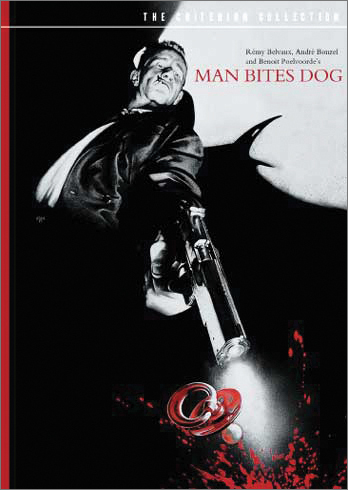
#165: Man Bites Dog


(Rémy Belvaux, André Bonzel, and Benoit Poelvoorde, 1992)

This is the first film I've seen during this project that I actively didn't like. Man Bites Dog is about a crew of documentary filmmakers who follow a serial killer around, learning his thoughts on life and depicting his various murders. My biggest problem with the film is that you can figure out everything the filmmakers are saying - about the media, about violence, about the inherent contradiction in verité film - from that one sentence description of the film.

Most of the references I have seen to Man Bites Dog in the last decade have been praise of its ability to predict the artificial construct of reality television. Yet the themes explored here seem cliché and well-worn even for 1992. The non-stop violence and charming racist aggression the main character displayed were more tiresome than shocking: we've seen it all before, and after all isn't that what the filmmakers are supposed to be telling us in the first place?