(Josef von Sternberg, 1927-28)
This was one of my biggest Criterion surprises in recent memory. I guess I should have been more interested in the set based on how much I loved The Scarlet Empress, but the serious looking fellow on the cover made me think the set was going to be rather dreary. I was totally wrong - this is one of my favorite boxsets in the Collection.
Of the three films, I have to say I loved The Last Command the most. While it's story and emotional arc are a bit dated, the effectiveness of the storytelling and Jannings's performance made it feel relevant and still impressive in a contemporary context. Meanwhile, Underworld transcended its historical importance as an early gangster picture and, like The Docks of New York, which is far superior to similar working class melodramas of its era, became a stellar example of the craft of cinema - not to mention a fun and surprise-filled ride!
One note about the packaging here, though: while the set they put together is really beautiful. I think the cover designs - all portraits - do a disservice to the motion and vitality of von Sternberg's vision. As someone who has seen the films, I think incorporating more of this energy would more accurately reflect the experience of viewing, in much the same way the Qatsi set was able to present those films. It's a very well-designed set, for sure, I just happen to think it's not 100% representative of the work it contains.
Still, overall I really can't recommend this boxset enough, and it's a shame that more people haven't been exposed to it (it's in just 450 or so collections on the site - for whatever that's worth). Obviously most silent film is an acquired taste - in many ways it's a completely separate artform from talkies - but I would be surprised if anyone who has liked at least one silent film in the past wouldn't be blown away by these. Please seek these out if you are at all intrigued.
Links to individual reviews:
Underworld
The Last Command
The Docks of New York
Showing posts with label 526-550. Show all posts
Friday, January 18, 2013
#531: The Docks of New York
(Josef von Sternberg, 1928)
Although it was my least favorite film in the von Sternberg slient boxset, The Docks of New York is a really enjoyable film and a fine addition to the set. It's also a fun look at the depiction of drinking during prohibition and a great case for George Bancroft as a movie star. The film begins on a boat but quickly sets up the central setting for the story in a pre-prohibition bar for sailors and other rowdy proletariat. Bancroft rescues a woman from an attempted suicide by drowning and they slowly become entangled in each other's lives. The plot couldn't be more basic, but as with von Sternberg's other Bancroft-starring film in this boxset, Underworld, it's all about execution.
In this regard, von Sternberg never seems to disappoint. This is a perfectly executed movie, and even though I enjoyed the other two films more, this was the one that made me realize just how underrated von Sternberg was as a director. I suppose most of that comes from the fact that his talkies are overshadowed by his muse, Marlene Dietrich, and he had a tragically short career filled with burned bridges and an unsustainably negative reputation. But I can't think of many more effortlessly talented film directors from the silent era - here was an artist who simply understood film language from the start, a natural talent. It makes The Docks of New York so much more exciting and fresh than it ought to be.
Although it was my least favorite film in the von Sternberg slient boxset, The Docks of New York is a really enjoyable film and a fine addition to the set. It's also a fun look at the depiction of drinking during prohibition and a great case for George Bancroft as a movie star. The film begins on a boat but quickly sets up the central setting for the story in a pre-prohibition bar for sailors and other rowdy proletariat. Bancroft rescues a woman from an attempted suicide by drowning and they slowly become entangled in each other's lives. The plot couldn't be more basic, but as with von Sternberg's other Bancroft-starring film in this boxset, Underworld, it's all about execution.
In this regard, von Sternberg never seems to disappoint. This is a perfectly executed movie, and even though I enjoyed the other two films more, this was the one that made me realize just how underrated von Sternberg was as a director. I suppose most of that comes from the fact that his talkies are overshadowed by his muse, Marlene Dietrich, and he had a tragically short career filled with burned bridges and an unsustainably negative reputation. But I can't think of many more effortlessly talented film directors from the silent era - here was an artist who simply understood film language from the start, a natural talent. It makes The Docks of New York so much more exciting and fresh than it ought to be.
Thursday, January 17, 2013
#530: The Last Command
(Josef von Sternberg, 1928)
The Last Command is not just better than the already-stunning Underworld, but is certainly one of the best silent films I've ever seen, a swirling epic that stretches from the cruel factory-line chaos of the film studio to the historical sweep of the Russian revolution. I don't typically use the word since it's so overused (I just use other overused words instead) but I was totally mesmerized from the moment the flashback started.
Depending on whether or not you believe Sternberg, The Last Command came from a story told to him by the great Ernst Lubitsch, who wasn't convinced it would make a good film - though obviously the sensibility he would have brought to this story would have been completely different. Either way, the film is based on a true story about a Russian general who ended up as an extra in Hollywood. Like any good movie about movies, the fun house mirrors are everywhere, most notable with regards to Jannings, his own career in Hollywood as German immigrant, and the various relationships between his character and both the film within the film and the film itself. But beyond these early explorations of what would later loosely be defined as postmodernism (something which had long been explored on stage), the film is also an intense story about one man's emotional journey and what it says about nationalism, human nature, and the mind. Jannings's character has such a strong sense of reality and self in the Russia flashbacks that his downfall is shocking even as we know it was coming (and deserved, regardless of your opinion of the philosophy behind the revolution). This same confidence makes the climax that much more believable and stunning.
There have only been a handful of directors whose movies I have watched over the course of covering the entire Collection that I have been so impressed with that I am compelled to seek out all of their other films that are available outside of Criterion. Melville, Ophuls, and Truffaut come to mind immediately. Von Sternberg is now on that list.
The Last Command is not just better than the already-stunning Underworld, but is certainly one of the best silent films I've ever seen, a swirling epic that stretches from the cruel factory-line chaos of the film studio to the historical sweep of the Russian revolution. I don't typically use the word since it's so overused (I just use other overused words instead) but I was totally mesmerized from the moment the flashback started.
Depending on whether or not you believe Sternberg, The Last Command came from a story told to him by the great Ernst Lubitsch, who wasn't convinced it would make a good film - though obviously the sensibility he would have brought to this story would have been completely different. Either way, the film is based on a true story about a Russian general who ended up as an extra in Hollywood. Like any good movie about movies, the fun house mirrors are everywhere, most notable with regards to Jannings, his own career in Hollywood as German immigrant, and the various relationships between his character and both the film within the film and the film itself. But beyond these early explorations of what would later loosely be defined as postmodernism (something which had long been explored on stage), the film is also an intense story about one man's emotional journey and what it says about nationalism, human nature, and the mind. Jannings's character has such a strong sense of reality and self in the Russia flashbacks that his downfall is shocking even as we know it was coming (and deserved, regardless of your opinion of the philosophy behind the revolution). This same confidence makes the climax that much more believable and stunning.
There have only been a handful of directors whose movies I have watched over the course of covering the entire Collection that I have been so impressed with that I am compelled to seek out all of their other films that are available outside of Criterion. Melville, Ophuls, and Truffaut come to mind immediately. Von Sternberg is now on that list.
Friday, January 11, 2013
#529: Underworld
(Josef von Sternberg, 1927)
This was a huge surprise for me. Although I've definitely enjoyed the von Sternberg talkies I've seen, I chalked most of that up to his muse, Marlene Dietrich, despite the fact that so much of what I loved about The Scarlet Empress in particular was the direction and cinematography. I had assumed that von Sternberg's early work would be less impressive and more subdued. I couldn't have been more wrong.
Underworld is largely considered the first modern gangster picture, the kind of movie with swell dames who turn sentimental and fast crooks that thumb their nose at mom and the law. It's where "the world is yours" originated - here it's "the city is yours" on a billboard. It's also fairly fast-paced for a silent film, or really any film before the 80s. It begins with an explosion and doesn't really let up for its 90 minutes.
The story of the film is certainly simplistic by today's standards. The characters are pretty one-note - really, only one of them changes at all, and it's a pretty quick and clumsy switch. But the movie is made on its cinematic language, which is lightyears ahead of what most of Hollywood was doing at the time. Von Sternberg uses some great dollys, POV shots, and quick cuts that make the visuals pop like you rarely see in the studio system from the era (no wonder the film was underreleased and von Sternberg continued to have an antagonistic relationship with his bosses). There are great small touches, too, like the use of the feathers and flowers.
This is really fun cinema, and I'd be surprised if even the least likely silent-film enthusiast wasn't taken in by this film. It's an unexpectedly great start for a boxset I'd been putting off a little.
This was a huge surprise for me. Although I've definitely enjoyed the von Sternberg talkies I've seen, I chalked most of that up to his muse, Marlene Dietrich, despite the fact that so much of what I loved about The Scarlet Empress in particular was the direction and cinematography. I had assumed that von Sternberg's early work would be less impressive and more subdued. I couldn't have been more wrong.
Underworld is largely considered the first modern gangster picture, the kind of movie with swell dames who turn sentimental and fast crooks that thumb their nose at mom and the law. It's where "the world is yours" originated - here it's "the city is yours" on a billboard. It's also fairly fast-paced for a silent film, or really any film before the 80s. It begins with an explosion and doesn't really let up for its 90 minutes.
The story of the film is certainly simplistic by today's standards. The characters are pretty one-note - really, only one of them changes at all, and it's a pretty quick and clumsy switch. But the movie is made on its cinematic language, which is lightyears ahead of what most of Hollywood was doing at the time. Von Sternberg uses some great dollys, POV shots, and quick cuts that make the visuals pop like you rarely see in the studio system from the era (no wonder the film was underreleased and von Sternberg continued to have an antagonistic relationship with his bosses). There are great small touches, too, like the use of the feathers and flowers.
This is really fun cinema, and I'd be surprised if even the least likely silent-film enthusiast wasn't taken in by this film. It's an unexpectedly great start for a boxset I'd been putting off a little.
Saturday, December 15, 2012
#544: Head
(Bob Rafelson, 1968)
Head is either the least funny, most disastrous comedy ever made or the weirdest, biggest "fuck you" to the mainstream ever released. I like to think it's the latter, but ultimately it doesn't make a difference because the film is such non-stop fun. It belongs next to House and Zazie dans le metro in the "what the fuck did I just watch?" Criterion hall of fame, even if it doesn't reach the clear-eyed genius of those two films.
Certainly what's most shocking about Head isn't that it was made by a Hollywood studio, but that it was made about the Monkees. Imagine this movie being made today by the cast of Glee and you get a pretty good idea how crazy this is. In the 60s, this was simply much easier to do because the gulf between the powerful men with the checkbooks had to rely on producers and directors to tell them what was going to work with the youth market they desperately wanted to reach but had no idea how to understand. Today, the people running development and marketing are far more likely to have a foot in both worlds - The Conquest of Cool model in action.
Head isn't as accomplished or perfect as its direct inspiration A Hard Day's Night, but it's still a hugely entertaining movie that is chockfull of ideas and jokes. I'd probably put it up against any other movie in the collection for pure crowd-pleasing cinematic fun, and my suspicion is that its rewatch value ain't too shabby either.
Head is either the least funny, most disastrous comedy ever made or the weirdest, biggest "fuck you" to the mainstream ever released. I like to think it's the latter, but ultimately it doesn't make a difference because the film is such non-stop fun. It belongs next to House and Zazie dans le metro in the "what the fuck did I just watch?" Criterion hall of fame, even if it doesn't reach the clear-eyed genius of those two films.
Certainly what's most shocking about Head isn't that it was made by a Hollywood studio, but that it was made about the Monkees. Imagine this movie being made today by the cast of Glee and you get a pretty good idea how crazy this is. In the 60s, this was simply much easier to do because the gulf between the powerful men with the checkbooks had to rely on producers and directors to tell them what was going to work with the youth market they desperately wanted to reach but had no idea how to understand. Today, the people running development and marketing are far more likely to have a foot in both worlds - The Conquest of Cool model in action.
Head isn't as accomplished or perfect as its direct inspiration A Hard Day's Night, but it's still a hugely entertaining movie that is chockfull of ideas and jokes. I'd probably put it up against any other movie in the collection for pure crowd-pleasing cinematic fun, and my suspicion is that its rewatch value ain't too shabby either.
Friday, December 14, 2012
#548: A Safe Place
(Henry Jaglom, 1971)
A Safe Place is one of the worst movies in the Criterion Collection - not in the sense of a movie like Armageddon which was probably doomed to awfulness from the start, but just an experiment by a bunch of talented people that didn't work in pretty much every way. At every stage of the production and post-production, there were probably moments where the movie seemed like it was going pretty well, and taken on their own most scenes here could be the weakest scene in a much better but still mostly improvised, abstractly constructed film. But when they are all combined, it's a practically insufferable mess. Of course, I'd rather have ten of these than one Armageddon, just because one of those ten is probably going to be both great and potentially revolutionary - which is pretty much what happened with BBS, only they had a much more impressive track record. (Of course, the counter-argument is that one Armageddon would ideally pay for ten of those movies - a better argument ten years ago when Hollywood still wanted to make interesting movies alongside their shitty blockbusters, and an even better one when considering why BBS wasn't able to continue the ride.)
Having watched all the films in the BBS set now (the set as a whole didn't get a spine number for some reason, so I won't be posting on it), this really is a great set. With the exception of the two movies included on this disc, every other film is worth multiple viewings. The Last Picture Show is a genuine masterpiece, while Head, Five Easy Pieces, and The King of Marvin Gardens represent one of the most underrated beginnings to a directing career I can think of in Hollywood. (Sadly, both Rafelson and Bogdanovich failed to live up to their promise in their later careers.) Though the set doesn't touch on all of the things that made New Hollywood great (and obviously some of the major movies in the movement aren't here), the framing of BBS allows Criterion to grab at least a handful of the most significant ones, and wrap them up in a nice neat bow.
By the way, as annoying as I found her in this movie, someone really ought to put Tuesday Weld in a movie. She's only 69 and I'm pretty sure she hasn't forgotten how to act, which she does pretty well. In fact, she was damn near great in the now little-seen Didion adaptation Play It as It Lays. I realize she was never that huge of a star like Jack or anything, but it's just another prime example of how easily women are forgotten in Hollywood that she hasn't made a movie in nearly ten years and a relevant movie in nearly twenty.
I don't have much else to say beyond: really, Orson Welles?
A Safe Place is one of the worst movies in the Criterion Collection - not in the sense of a movie like Armageddon which was probably doomed to awfulness from the start, but just an experiment by a bunch of talented people that didn't work in pretty much every way. At every stage of the production and post-production, there were probably moments where the movie seemed like it was going pretty well, and taken on their own most scenes here could be the weakest scene in a much better but still mostly improvised, abstractly constructed film. But when they are all combined, it's a practically insufferable mess. Of course, I'd rather have ten of these than one Armageddon, just because one of those ten is probably going to be both great and potentially revolutionary - which is pretty much what happened with BBS, only they had a much more impressive track record. (Of course, the counter-argument is that one Armageddon would ideally pay for ten of those movies - a better argument ten years ago when Hollywood still wanted to make interesting movies alongside their shitty blockbusters, and an even better one when considering why BBS wasn't able to continue the ride.)
Having watched all the films in the BBS set now (the set as a whole didn't get a spine number for some reason, so I won't be posting on it), this really is a great set. With the exception of the two movies included on this disc, every other film is worth multiple viewings. The Last Picture Show is a genuine masterpiece, while Head, Five Easy Pieces, and The King of Marvin Gardens represent one of the most underrated beginnings to a directing career I can think of in Hollywood. (Sadly, both Rafelson and Bogdanovich failed to live up to their promise in their later careers.) Though the set doesn't touch on all of the things that made New Hollywood great (and obviously some of the major movies in the movement aren't here), the framing of BBS allows Criterion to grab at least a handful of the most significant ones, and wrap them up in a nice neat bow.
By the way, as annoying as I found her in this movie, someone really ought to put Tuesday Weld in a movie. She's only 69 and I'm pretty sure she hasn't forgotten how to act, which she does pretty well. In fact, she was damn near great in the now little-seen Didion adaptation Play It as It Lays. I realize she was never that huge of a star like Jack or anything, but it's just another prime example of how easily women are forgotten in Hollywood that she hasn't made a movie in nearly ten years and a relevant movie in nearly twenty.
I don't have much else to say beyond: really, Orson Welles?
Tuesday, December 11, 2012
#550: The King of Marvin Gardens
(Bob Rafelson, 1972)
The King of Marvin Gardens defies reviewing. It's not a significant enough work to demand evaluation, but it's so carefully constructed and lovingly finished that it contains intricate details that might otherwise go unnoticed. It simply has to be seen to be understood, which isn't true of even many movies far greater than it. It's a crushingly sad movie about lost people that never really feels worth it. I loved it nevertheless.
The film opens with Jack Nicholson in a darkened room without context telling the story of how he and his brother allowed his grandfather to choke to death on a fishbone. Only when he is finished with the story do we discover that he is on the radio, telling his story to his listeners. Only when he gets home do we realize he lives with his grandfather.
The scene is significant for two reasons. First, Jack Nicholson is one of the greatest living actors, and it's apparent right from the beginning here. The scene is a great reminder of his talent, something that might be forgotten as he, like Robert DeNiro and Al Pacino, turns into a parody of himself in his twilight years. Nicholson's face and voice are enough to captivate you alone, something proved by this cold open. Second, the film's key relationship - between Nicholson and his brother, played just as impressively by the underrated Bruce Dern - hinges upon the true-life dynamic between the two and the ever-present push and pull between reality and fantasy, truth and lies.
One interesting choice Rafelson and his screenwriter made was to make Nicholson's character the younger brother. Typically, you would expect to see him as the older brother, constantly needing to save Dern from his fantasies. By making him the younger brother, the film sets Nicholson up as willingly playing along with his brother's games, desperate for his stories to be true in order to confirm the reverence he has for his older brother. It's a beautifully sad dynamic, and it makes the film much richer.
There are some real flaws here, though, and a lot of how one feels about the movie will depend on how forced the quirkiness seems. Moments like the fake beauty pageant and the horses on the beach could seem overly precious, like a prototype for another movie set in New Jersey, the far more conventional and forced Garden State. And there is a legitimate case to be made that the climactic moment is not earned - even if it is it remains surprising. The movie is messier than its predecessor, the much-better-known Five Easy Pieces, but I liked it more because it manages to take that film's tone and give it a further surreal edge.
Rafelson's career stalled after this film, and though he continued to direct, it was at a much slower clip with very little success. His rhythms were certainly of a particular moment, but it's a shame he didn't get more work as he matured. Five Easy Pieces and The King of Marvin Gardens represent some of the strongest personal dramas of the early New Hollywood period, and their inclusion in the BBS boxset makes them welcome additions to the Collection.
The King of Marvin Gardens defies reviewing. It's not a significant enough work to demand evaluation, but it's so carefully constructed and lovingly finished that it contains intricate details that might otherwise go unnoticed. It simply has to be seen to be understood, which isn't true of even many movies far greater than it. It's a crushingly sad movie about lost people that never really feels worth it. I loved it nevertheless.
The film opens with Jack Nicholson in a darkened room without context telling the story of how he and his brother allowed his grandfather to choke to death on a fishbone. Only when he is finished with the story do we discover that he is on the radio, telling his story to his listeners. Only when he gets home do we realize he lives with his grandfather.
The scene is significant for two reasons. First, Jack Nicholson is one of the greatest living actors, and it's apparent right from the beginning here. The scene is a great reminder of his talent, something that might be forgotten as he, like Robert DeNiro and Al Pacino, turns into a parody of himself in his twilight years. Nicholson's face and voice are enough to captivate you alone, something proved by this cold open. Second, the film's key relationship - between Nicholson and his brother, played just as impressively by the underrated Bruce Dern - hinges upon the true-life dynamic between the two and the ever-present push and pull between reality and fantasy, truth and lies.
One interesting choice Rafelson and his screenwriter made was to make Nicholson's character the younger brother. Typically, you would expect to see him as the older brother, constantly needing to save Dern from his fantasies. By making him the younger brother, the film sets Nicholson up as willingly playing along with his brother's games, desperate for his stories to be true in order to confirm the reverence he has for his older brother. It's a beautifully sad dynamic, and it makes the film much richer.
There are some real flaws here, though, and a lot of how one feels about the movie will depend on how forced the quirkiness seems. Moments like the fake beauty pageant and the horses on the beach could seem overly precious, like a prototype for another movie set in New Jersey, the far more conventional and forced Garden State. And there is a legitimate case to be made that the climactic moment is not earned - even if it is it remains surprising. The movie is messier than its predecessor, the much-better-known Five Easy Pieces, but I liked it more because it manages to take that film's tone and give it a further surreal edge.
Rafelson's career stalled after this film, and though he continued to direct, it was at a much slower clip with very little success. His rhythms were certainly of a particular moment, but it's a shame he didn't get more work as he matured. Five Easy Pieces and The King of Marvin Gardens represent some of the strongest personal dramas of the early New Hollywood period, and their inclusion in the BBS boxset makes them welcome additions to the Collection.
Monday, December 3, 2012
#547: Drive, He Said
(Jack Nicholson, 1970)
Drive, He Said is thethird (fourth - I've also seen the dated Easy Rider) film in the BBS box set Criterion released a few years ago that I have seen - I've watched The Last Picture Show, the most famous film in the set, five or six times over the years, and I saw Five Easy Pieces years ago. The former is one of my favorite movies and one of the great films of the 70s - both are certainly deserving of a standalone release, but they probably won't get one because of licensing issues.
The Last Picture Show is also notable in this set as the only film Jack Nicholson didn't have a direct hand in. The only other film he doesn't perform in is this one - which he directed. In fact, the movie is the first film directed by the actor, one of just three that he made. It was filmed between two of Nicholson's greatest roles, his work in Five Easy Pieces and Carnal Knowledge. Both of those movies are much more worthwhile than this one, an occasionally interesting but entirely forgettable piece of quirky film history that never really stops being an experiment.
Nicholson, of course, is well known now as the highest profile Lakers fan, and Drive, He Said confirms his interest in the sport is not a recent development. More importantly, the parallel between the sport of the protagonist and the political struggle of his roommate feels especially insightful as a metaphor for the generational gap that was readily apparent as the 60s bled into the 70s. But I don't know that the insights of the film delve any deeper than this initial observation. Furthermore, the story drags and feels half-baked, like they created the screenplay as they were going. The camera work and acting is similarly amateurish, making the film seem even more tossed together on the side, but without any of the crackling energy of the best projects of this nature.
I don't expect any other film in this set to be so slight (though there's probably a reason why it shares a disc with A Safe Place, while the other movies all get their own). Obviously Nicholson looms large in these films, so including Drive, He Said seems logical and worthwhile. But the film itself is a handful of interesting ideas strung together into a feature that doesn't amount to very much.
Drive, He Said is the
The Last Picture Show is also notable in this set as the only film Jack Nicholson didn't have a direct hand in. The only other film he doesn't perform in is this one - which he directed. In fact, the movie is the first film directed by the actor, one of just three that he made. It was filmed between two of Nicholson's greatest roles, his work in Five Easy Pieces and Carnal Knowledge. Both of those movies are much more worthwhile than this one, an occasionally interesting but entirely forgettable piece of quirky film history that never really stops being an experiment.
Nicholson, of course, is well known now as the highest profile Lakers fan, and Drive, He Said confirms his interest in the sport is not a recent development. More importantly, the parallel between the sport of the protagonist and the political struggle of his roommate feels especially insightful as a metaphor for the generational gap that was readily apparent as the 60s bled into the 70s. But I don't know that the insights of the film delve any deeper than this initial observation. Furthermore, the story drags and feels half-baked, like they created the screenplay as they were going. The camera work and acting is similarly amateurish, making the film seem even more tossed together on the side, but without any of the crackling energy of the best projects of this nature.
I don't expect any other film in this set to be so slight (though there's probably a reason why it shares a disc with A Safe Place, while the other movies all get their own). Obviously Nicholson looms large in these films, so including Drive, He Said seems logical and worthwhile. But the film itself is a handful of interesting ideas strung together into a feature that doesn't amount to very much.
Monday, September 5, 2011
#534: L'Enfance nue
L'Enfance nue is a sad, beautiful movie. It's also an extremely realistic and heartfelt depiction of the foster child system and its limitations. While I had serious problems with the first Pialat movie I watched, A nos amours, I was impressed with the director's technique, and therefore had a positive attitude going into this film. I was rewarded with an emotionally satisfying coming-of-age journey that lacked the unintentional romanticization of Pialat's later film.
L'Enfance nue was Pialat's first feature, and it's structurally odd. Rather than watch Francois being shuttled through multiple foster homes - or perhaps a more conventional three or four - Pialat has chosen just two: his first long term landing with a couple that decides he is too much to handle, and a real-life-foster-parent couple that ends up being the closest he will seemingly come to feeling like he has a family. The film shifts between moods, showing Francois at his most vulnerable and empathetic before revealing the rage and misguided rebellion of his darker moments. It also looks away from Francois just enough to give us a broader idea of the foster system in France without overloading the film with message moments that would read like a wannabe documentary. Finally, the movie ends extremely abruptly, as Francois's voice is heard reading a letter he has sent his foster parents. It's an uneasy finale - we all know despite his best intentions that Francois cannot be fully "saved" - but the movie is not intending to wrap up his story any more than Truffaut wrapped up Antoine Doinel's story in The 400 Blows (though, unlike Truffaut, Pialat never felt it necessary to literally revisit Francois's story).
The comparison between these two coming-of-age films - released nearly a decade apart - is especially apt because each director's touch runs parallel to the stories of their respective films. Where Truffaut was all bluster and moviemaking flash, his Doinel was intent on ruining the relatively stable (emphasis on relatively) life he led at home and at school. Conversely, Pialat is careful to avoid leaving a fingerprint anywhere on his film, and Francois's story is similarly gentle and reactive rather than aggressive. Of course, it's impossible to avoid leaving your mark on a film you made, just as it is impossible for us to know how Francois is feeling without seeing the destructive or downright cruel things he does. Pialat is extremely aware of both of these things. His care when dealing with each is what makes him a superb filmmaker, even at this early stage in his career.
Monday, July 4, 2011
#532: Louie Bluie
Louie Bluie is a thoroughly entertaining entry in the subgenre of documentaries centered around one noteworthy protagonist. Within this subgenre are two types of subjects: famous or historically notable people - think General Idi Amin Dada: A Self Portrait or even Zwigoff's follow-up to this film, Crumb - and quirky or unique individuals that are interesting enough to carry a film. Louie Bluie focuses on the latter type, an obscure blues musician named Howard "Louie Bluie" Armstrong.
Armstrong is an incredible musician, a folk artist, an impressive calligrapher, and a witty, charming older man with a fascinating life story - basically the perfect subject for a documentary. He's also another reminder of how many wildly talented people end up as also-rans commercially. So much of what we deem artistic success can be attributed to the luck of timing - knowing the right people, getting the right break, and, um, not being born black in the American South before 1940.
Louie Bluie was announced along with Crumb, Zwigoff's much-higher-profile breakthrough documentary of the famous counter-culture comic artist. It might seem reasonable to wonder - had Zwigoff not requested that the two films be released separately - if Criterion would have made Louie Bluie an extra on Crumb, as they have done with lesser-known first films in the past. Two things make me happy they didn't go this way even if they could: aside from superficial comparisons (folk art, marginalized subjects) the two films are almost totally different in both theme and tone and more importantly Louie Bluie stands on its own rather well. In fact, it might be my favorite of the two films - on a macro level, it's a love letter to a generation of artists who were often taken for granted and too quickly forgotten. But as a work that is quietly contained and lacking in ambition in the most appealing way, Louie Bluie is a simple document of a fascinating man that can now reach an audience that can appreciate it.
Thursday, June 16, 2011
#539: House
House is undoubtedly one of the strangest movies you will ever see. It's also not coincidentally one of the most invigorating from a filmmaking perspective - there are moments here that are so filled with energy and ideas that it reminded me of when I was a kid and I would watch NBA playoff games and get so invested in the sport that I would have to go outside and play myself. House made me want to go into my backyard and make a movie - whatever movie I could, pulled together with camcorders and borrowed friends - and pour my whole being into it.
The plot of the movie would hardly qualify for an episode of The Twilight Zone. A group of teen girls has their vacation canceled, so one of them arranges for the group to visit her dead mother's older sister, whom she hasn't seen in years. As in most movies with a smiling ghost cat on the cover, things don't go as planned. The simple structure, however, is essential when a movie is this insane - there would just be no other way of following along with what's happening once pianos start eating people.
Even in the relatively calm beginning the film establishes its anarchic tone and then rarely lets up. Oddly, parts of the movie reminded me of Godard's A Woman is a Women, particularly moments that seemed more concerned with topical cool than rewarding plot development. But the movie that most came to mind was the comparatively tame Run, Lola, Run, which rode a similar crest of energy and style to international success a decade ago. Both movies have a certain music video aesthetic (though, of course, House was released before music videos became ubiquitous and developed the language we currently identify with the genre) and both films take simple stories and build something extraordinary out of them. The most notable differences then can be attributed to the general sensibilities of their respective cultures, which in the case of House takes shape as a giant explosion of pop grotesqueries.
Perhaps the most amazing thing about House is that it was a commercial success in Japan. I don't know what that says about Japan, but the idea of a film this strange being successful in the US with anything other than the cult audience that has received it with open arms is almost entirely implausible. Still, the film is so strange, so idiosyncratic, so, well, itself that it refuses to be ignored. House is one step away from a giant disaster in every direction, and yet it is so infused with an unrestrained love of filmmaking that it walks the tightrope beautifully.
Saturday, April 30, 2011
#535: Merry Christmas Mr. Lawrence
I love a lot of movies from the 80s but as a whole the work produced during that decade suffered greatly from the aesthetic of the era. Films weren't necessarily damaged in quality, but the editing, graphic design, cinematography, and most importantly scores were so consciously rejecting previous norms in ways that didn't end up catching on that the work is now extremely dated. This happens even to movies that aren't actually set in the 80s, like this one, the WWII POW drama Merry Christmas Mr. Lawrence.
The film is best known for its stunt casting. Oshima put British pop icon David Bowie across the battle line from Japanese superstar Ryûichi Sakamoto, who also composed the score. Both the casting and the music are the most difficult aspects of the film - but not because either is subpar. Both Bowie and Sakamoto perform their roles admirably, and the music in the film is quite good. But the awareness of these two elements and how out of place they are in the 1940s POW setting constantly works to take you out of the film. In some ways this makes the movie more interesting, because the fascination Sakamoto's character has for Bowie's works on multiple levels, hammered home by the electronic score that has been made obsolete by evolving technologies.
The film's real strength, however, comes from Oshima's firm iconoclastic hand. The movie is a strong reminder of Oshima's talent and unique voice, and the perspective on both war and its participants is a unique, complex, and entertaining one. Elsewhere, Tom Conti in the titular role and Beat Takeshi - soon to become an accomplished director himself - are the real heart of the film, and both are captivating and intriguing. Still, Merry Christmas Mr. Lawrence consistently seems more interesting than successful. It's by no means a bad movie, but the pacing is uneven and Oshima seems more interested in getting to all of his points than focusing on one or two that would make the film a more cohesive whole. Having said that, I wish all films were this ambitious, because even the less successful ones are a pleasure to see.
Sunday, April 24, 2011
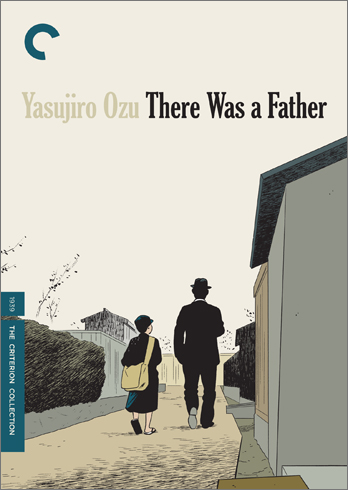
#526: There Was a Father
(Yasujiro Ozu, 1942)
Loved it. There Was a Father belongs to a mini-genre that I am consistently fascinated by: stories about fathers who are unable to compromise their moral integrity, leading to sacrifices for a family or child. In this case, the father is a teacher who feels obligated to resign when through no fault of his own a child under his supervision dies on a school retreat. The decision comes not from pressure from the family or his superiors, but from his own sense of guilt and the self-awareness to know he wouldn't be able to send his own child to be supervised by someone in his position.
Newly unemployed, the widower and father of one looks for work in other towns in order to pay his son's way through school. The only options open to him place him increasingly further away from his son, who is put in boarding school and works his way towards becoming a teacher, just like his father. This is the basic plot of the film, but really the movie is about the father/son relationship, both here and universally. The father in the film means to show his son through example how to live your life, but all the son wants from his father is love and affection. This struggle is a common one in narratives, particularly from the past hundred years, but the way Ozu depicts it is uniquely Japanese.
Conflict in Ozu's films continues to come from within, something that is anathema to Hollywood. The father does not hate the son for loving him above his duties to society, he just intends to guide his son towards a dignified life. The conflict in There Was a Father creeps up on you, avoiding rising drama or climax, much in the way life avoids those things. His work is so gentle that it can sometimes seem as if no one made an Ozu film - like a painting without brush strokes. Yet each film generates similar responses in similar sequence, and each story haunts you long after you finished watching it unfold, and in the end, There Was a Father - like all of Ozu's work - bears his unmistakable mark.
Loved it. There Was a Father belongs to a mini-genre that I am consistently fascinated by: stories about fathers who are unable to compromise their moral integrity, leading to sacrifices for a family or child. In this case, the father is a teacher who feels obligated to resign when through no fault of his own a child under his supervision dies on a school retreat. The decision comes not from pressure from the family or his superiors, but from his own sense of guilt and the self-awareness to know he wouldn't be able to send his own child to be supervised by someone in his position.
Newly unemployed, the widower and father of one looks for work in other towns in order to pay his son's way through school. The only options open to him place him increasingly further away from his son, who is put in boarding school and works his way towards becoming a teacher, just like his father. This is the basic plot of the film, but really the movie is about the father/son relationship, both here and universally. The father in the film means to show his son through example how to live your life, but all the son wants from his father is love and affection. This struggle is a common one in narratives, particularly from the past hundred years, but the way Ozu depicts it is uniquely Japanese.
Conflict in Ozu's films continues to come from within, something that is anathema to Hollywood. The father does not hate the son for loving him above his duties to society, he just intends to guide his son towards a dignified life. The conflict in There Was a Father creeps up on you, avoiding rising drama or climax, much in the way life avoids those things. His work is so gentle that it can sometimes seem as if no one made an Ozu film - like a painting without brush strokes. Yet each film generates similar responses in similar sequence, and each story haunts you long after you finished watching it unfold, and in the end, There Was a Father - like all of Ozu's work - bears his unmistakable mark.
Monday, November 1, 2010
#537: The Magician
The Bergman film to receive the Criterion treatment most recently, The Magician is also one of the more unusual films in the director's entries. For starters, there's a happy ending, something that happened occasionally, as with the comedy Smiles of a Summer Night, but with very few of the director's films that are so directly tied into his core themes, as The Magician certainly is. Furthermore, moments of The Magician play out more like Corridors of Blood than The Seventh Seal. There are hands reaching out from the darkness, solemn discussions of the unknown (magic, not God... or are they one and the same to Bergman?), and criminals with a mysterious past in disguises.
The magician of the title is played (masterfully as always) by Max Von Sydow as Bergman's representative artist, facing off against the scientist. The showdown between the two (with a bit of the law thrown in) is a fascinating give and take between the two perspectives, and the final development, in which the king calls on the magician to perform for him, seems to imply that art will always win out, not because people believe despite all evidence but because they want to believe. This is what ties The Magician so strongly into the overall themes of Bergman's films, and it's what (along with the mere fact that Bergman made the movie) elevates it beyond its humble roots as a house of mirrors. I don't think the film can compare with Bergman's great films (like the one I watched after this one, Through the Glass Darkly) but standing on its own, it's a fine, entertaining investigation into our inability to ignore our own doubts about our reality and our reluctance to change it.
Thursday, August 19, 2010
#542: Antichrist
(Lars Von Trier, 2009)
Lars Von Trier is a terrible person, as I mentioned in my brief rundown of Europa. Unlike some people, I have never found it that difficult to separate my feelings towards a filmmaker from my feelings towards the film. But in the case of Antichrist, I don't have to even bother, because this movie is a piece of shit.
OK, I'm being provocative. It's not that bad. But I learned from the best, and no one provokes like Trier. (Do I have to use his fake "von" when addressing him by his last name? I hope not.) At his most technical, Trier is an excellent filmmaker. He has a great eye, his use of color in even a purposefully drab film such as this is spectacular, and he knows how to get the best out of his actors, who seem to trust him with their very lives. Both Willem Dafoe and Charlotte Gainsbourg give performances that completely lack vanity or self-consciousness. I often roll my eyes when I hear someone say a performance is "brave" - acting can be depicted as much more than it is - but these are truly brave performances in the sense that they give themselves over completely to the material and are not afraid to look ridiculous or damage their own psyches in the process.
Still, the actual movie to which they have given themselves over is largely worthless. The shock moments are the ones everyone focuses on, and they are here in spades: if ejaculating blood, crushing birds to death, and homemade female castration are your thing, well, there's finally a movie for you. But the most damning thing about Antichrist is how boring the whole routine is. The relationship between Dafoe and Gainsbourg is so hateful and completely separated from backstory or defining characteristics that any interaction between the two grows intolerably dull almost immediately.
Of course, Trier does this on purpose, because the couple isn't meant to be specific. In fact, they don't even have names; Dafoe is "He" and Gainsbourg is "She." Apart from piling on more pretentious elements to the already stuffed film (the prologue of the film is so over-the-top ridiculous that I was actually laughing) these vague names are the most obvious tip-off that the film is meant to be an academic depiction of more general psychological archetypes. Trier is most likely going as general as possible, and many people have argued that the movie is essentially damning all women. I actually felt like the movie was saying the exact opposite, that Dafoe was projecting his own sorrow into violent anger about Gainsbourg creating his child - and therefore allowing him to be destroyed - to the point where he could only destroy her in return. But honestly, I don't really care, because the movie doesn't particularly make me care.
Sadly, the movie I would most compare Antichrist to is Last Year at Marienbad, which also used nameless characters to deal with complex male/female dynamics. But it's a real tragedy to do so, because Antichrist is the giant cartoon hammer to Last Year at Marienbad's velvet glove. Trier is certainly an ambitious director, but I can never shake the feeling that his films are less an attempt to delve into his own psyche or explore the common societal dynamics and more a crass grab for the audience's attention in the form of a cruel and useless joke.
Lars Von Trier is a terrible person, as I mentioned in my brief rundown of Europa. Unlike some people, I have never found it that difficult to separate my feelings towards a filmmaker from my feelings towards the film. But in the case of Antichrist, I don't have to even bother, because this movie is a piece of shit.
OK, I'm being provocative. It's not that bad. But I learned from the best, and no one provokes like Trier. (Do I have to use his fake "von" when addressing him by his last name? I hope not.) At his most technical, Trier is an excellent filmmaker. He has a great eye, his use of color in even a purposefully drab film such as this is spectacular, and he knows how to get the best out of his actors, who seem to trust him with their very lives. Both Willem Dafoe and Charlotte Gainsbourg give performances that completely lack vanity or self-consciousness. I often roll my eyes when I hear someone say a performance is "brave" - acting can be depicted as much more than it is - but these are truly brave performances in the sense that they give themselves over completely to the material and are not afraid to look ridiculous or damage their own psyches in the process.
Still, the actual movie to which they have given themselves over is largely worthless. The shock moments are the ones everyone focuses on, and they are here in spades: if ejaculating blood, crushing birds to death, and homemade female castration are your thing, well, there's finally a movie for you. But the most damning thing about Antichrist is how boring the whole routine is. The relationship between Dafoe and Gainsbourg is so hateful and completely separated from backstory or defining characteristics that any interaction between the two grows intolerably dull almost immediately.
Of course, Trier does this on purpose, because the couple isn't meant to be specific. In fact, they don't even have names; Dafoe is "He" and Gainsbourg is "She." Apart from piling on more pretentious elements to the already stuffed film (the prologue of the film is so over-the-top ridiculous that I was actually laughing) these vague names are the most obvious tip-off that the film is meant to be an academic depiction of more general psychological archetypes. Trier is most likely going as general as possible, and many people have argued that the movie is essentially damning all women. I actually felt like the movie was saying the exact opposite, that Dafoe was projecting his own sorrow into violent anger about Gainsbourg creating his child - and therefore allowing him to be destroyed - to the point where he could only destroy her in return. But honestly, I don't really care, because the movie doesn't particularly make me care.
Sadly, the movie I would most compare Antichrist to is Last Year at Marienbad, which also used nameless characters to deal with complex male/female dynamics. But it's a real tragedy to do so, because Antichrist is the giant cartoon hammer to Last Year at Marienbad's velvet glove. Trier is certainly an ambitious director, but I can never shake the feeling that his films are less an attempt to delve into his own psyche or explore the common societal dynamics and more a crass grab for the audience's attention in the form of a cruel and useless joke.
Saturday, July 31, 2010
#527: The Secret of the Grain
(Adellatif Kechiche, 2007)
Yet another of the Criterion films released in conjunction with IFC Films, The Secret of the Grain isn't the film that Summer Hours or Everlasting Moments is. That's not to say it doesn't have its strong points. The film is impeccably acted, which is to say that you would have a hard time remembering that there is acting being done, and the story becomes extremely suspenseful and exciting by the end; you really do get wrapped up in these characters' lives. But too many scenes drag on too long, and the film could have been forty minutes shorter.
The ending is where the movie is most likely to divide viewers (at least the ones that make it through the first hour, where nothing particularly happens), but I had mixed feelings about it. Abrupt endings can be extremely moving, but they can also seem like more of a cop out than anything else, and I thought this ending was a little of both.
The Secret of the Grain is a good movie, but it's certainly not a great one, and I wonder how I will feel about it five years now, or if anyone will be talking about it then. Without its place in Criterion, I think this is a movie that would be largely forgotten.
Yet another of the Criterion films released in conjunction with IFC Films, The Secret of the Grain isn't the film that Summer Hours or Everlasting Moments is. That's not to say it doesn't have its strong points. The film is impeccably acted, which is to say that you would have a hard time remembering that there is acting being done, and the story becomes extremely suspenseful and exciting by the end; you really do get wrapped up in these characters' lives. But too many scenes drag on too long, and the film could have been forty minutes shorter.
The ending is where the movie is most likely to divide viewers (at least the ones that make it through the first hour, where nothing particularly happens), but I had mixed feelings about it. Abrupt endings can be extremely moving, but they can also seem like more of a cop out than anything else, and I thought this ending was a little of both.
The Secret of the Grain is a good movie, but it's certainly not a great one, and I wonder how I will feel about it five years now, or if anyone will be talking about it then. Without its place in Criterion, I think this is a movie that would be largely forgotten.
Subscribe to:
Posts (Atom)