Saturday, April 30, 2011

#357: The Fallen Idol

(Carol Reed, 1948)

I had mixed feelings about The Fallen Idol. On one hand, I found the little boy at the center of the film to be both annoying as a character and distracting as an actor. It's always difficult for a film to survive placing a young child at the center of the plot, primarily because most children aren't very good actors but also because kids act differently than adults. This is something that is very difficult for filmmakers to imitate - there aren't any child screenwriters after all, and even though we've all been children how quickly we forget what it's actually like. But here even more than usual I found myself looking at the main character as a performer instead of a child caught up in his friend's intrigue. This was exacerbated by the plot's seemingly unlikely twists and turns - there just feels like there are too many moments when this thing should fall apart. Unlike other films with equally ludicrous moments, the richness of the story and its presentation is not enough of a distraction.

On the other hand, there are some truly great moments in the film, both visually and story-wise. The beautiful cinematography by Georges Périnal (who already had a rich career that included The Life and Death of Colonel Blimp and the underrated treat Things to Come) pops especially as it snakes its way through the embassy's endless rooms packed with detail. The film's pivotal scene in which the young boy believes he has seen his hero murder his estranged wife is especially well constructed, and the moment when the police detective throws the all-important telegram off the balcony - though somewhat contrived - rivals the great moments in the contemporary thrillers of Hitchcock.

I'm well aware of the intentional presentation of the child as out of step with his surroundings, unaware of the games being played by his adult counterparts. In many ways, this choice works incredibly well, and the way Reed shoots the film very much allows the viewer to take the perspective of a child - the movie is an ambitious attempt at first person narrative from Phile's perspective. It's just very hard to feel entirely satisfied with the final product. Ultimately, I think future viewings may change my mind about this aspect of the film - once I am used to Phile, I can focus more on the intention of the film. However, what ultimately prevents me from feeling like The Fallen Idol measures up to Reed's next film, the thoroughly entertaining The Third Man, are those unrealistic moments that pull me out of the story. Still, the film is extremely enjoyable, and it brings a unique perspective to Criterion's expanding coming-of-age entries.

#535: Merry Christmas Mr. Lawrence

(Nagisa Oshima, 1983)

I love a lot of movies from the 80s but as a whole the work produced during that decade suffered greatly from the aesthetic of the era. Films weren't necessarily damaged in quality, but the editing, graphic design, cinematography, and most importantly scores were so consciously rejecting previous norms in ways that didn't end up catching on that the work is now extremely dated. This happens even to movies that aren't actually set in the 80s, like this one, the WWII POW drama Merry Christmas Mr. Lawrence.

The film is best known for its stunt casting. Oshima put British pop icon David Bowie across the battle line from Japanese superstar Ryûichi Sakamoto, who also composed the score. Both the casting and the music are the most difficult aspects of the film - but not because either is subpar. Both Bowie and Sakamoto perform their roles admirably, and the music in the film is quite good. But the awareness of these two elements and how out of place they are in the 1940s POW setting constantly works to take you out of the film. In some ways this makes the movie more interesting, because the fascination Sakamoto's character has for Bowie's works on multiple levels, hammered home by the electronic score that has been made obsolete by evolving technologies.

The film's real strength, however, comes from Oshima's firm iconoclastic hand. The movie is a strong reminder of Oshima's talent and unique voice, and the perspective on both war and its participants is a unique, complex, and entertaining one. Elsewhere, Tom Conti in the titular role and Beat Takeshi - soon to become an accomplished director himself - are the real heart of the film, and both are captivating and intriguing. Still, Merry Christmas Mr. Lawrence consistently seems more interesting than successful. It's by no means a bad movie, but the pacing is uneven and Oshima seems more interested in getting to all of his points than focusing on one or two that would make the film a more cohesive whole. Having said that, I wish all films were this ambitious, because even the less successful ones are a pleasure to see.

Tuesday, April 26, 2011

#564: Pale Flower

(Masahiro Shinoda, 1964)

Pale Flower is a love story where the two characters have no idea how to love. When the gangster Muraki first encounters the mysterious Saeko in an underground gambling den, he has just been released from prison for killing a man. He's immediately infatuated with her, but it's not entirely clear why beyond her obvious beauty and the novelty of her presence in a mostly male world. Like other damaged-love stories, Muraki and Saeko come together through mutual fascination - he is fascinated by her constant search for an adrenaline rush, while she is drawn in by his ability to take a life. But Pale Flower isn't like similar films because at no point during the film does it seem likely that their relationship will be consummated or even fully expressed. When Muraki runs into Saeko in her real life, he seems entirely disappointed with the fact that she exists. It is clear he wishes he had never seen her. Yet he is fascinated by her double life, and the scene takes on an erotic quality that makes the film around it seem all the more sexual.

Masahiro Shinoda made Pale Flower as a direct response to the popular yakuza films of the era, but really Shinoda is channeling Godard and Melville, with a splash of b-movie Hollywood noir. The director uses all manner of cinematic techniques, and while some of them come across as meaningless flash, other elements (particularly the dream sequence) are as mesmerizing as Toru Takemitsu's score, which blends in with the rhythms of the gambling sounds that populate the characters' world. The film's dull nihilism manages to avoid easy traps because of the technique on show.

Shinoda has two other films in the collection: Samurai Spy, which I had mixed feelings about, and Double Suicide, which I have yet to see. Both of those films were made after Pale Flower, and it's clear this is the work of a young director (he was in his early thirties at the time). The story is ambitious where more mature filmmakers would have been intimate, the style is flashy where subtlety would have seemed more impenetrable but also more intense, and the film's freewheeling attitude reminds me of Miike's Ichi the Killer (minus the torture and bisected bodies). I have little doubt that Quentin Taratino loves Pale Flower.

This might all give the sense that I thought Pale Flower was a less successful film. But these choices don't make the film worse, just different than it might have been in other hands - less delicate, perhaps, but more energetic. Furthermore, the anti-love story at the center has left me haunted, and despite the various flourishes I think Melville would approve of Shinoda's work here for this reason. Pale Flower is about these two characters - the warring gang plot is merely a vehicle to get Muraki to kill again, his dalliance with the other woman a counterpoint to his confused and unrealized feelings towards the focus of his affections. In this regard, the film is wholly successful and extremely moving. The final moments of the film could come off as supremely frustrating, but instead they are the key to the whole puzzle: these characters aren't interested in the people who catch their affection but in the thrill of the moment. Once the card is turned over, its spell is broken.

#439: Trafic

(Jacques Tati, 1971)

Trafic is Tati's follow-up to his masterpiece, Playtime. Because that film performed so poorly at the box office, Tati had to make Trafic for much less money and funding issues hounded his production. The end result lacks the big budget sets from Playtime, but it also lacks its sparkle.

The movie is still undeniably charming. Loosely centered around a group of car public relations people (with Hulot at the head) hauling a camping car to a road show on the back of a big truck, the movie is no different than Tati's other Hulot films in that it ties a series of comic adventures into an overarching story that is a commentary on modern life.

It has been said that all humor is inherently angry, but I can think of no better exception than Tati. His work in Trafic focuses on the car culture that by the 1970s had taken hold across the world, but as in his other films, Tati is less interested in criticizing this culture than he is in observing it. The humor comes out of the funny things people do around cars and the gap between this behavior and their natural behavior. Many of these moments aren't even jokes, such as the montages of people picking their nose or yawning, but are instead observations of a culture - as if the film was a National Geographic expose on an undiscovered tribe.

Because the film has longer stretches of observation between its jokes, the pacing can be slow - much slower than in Playtime where, true to its title, there is always something new to distract you. The Hulot character was beside the point in Playtime, but here he seems against it - Tati only used Hulot to get funding for the film, and clearly the character that existed in M. Hulot's Holiday or even Mon Oncle has been mostly eliminated, the cropped trousers and Tati's bumbling walk all that's left of a comedy icon. Not only because of this, Trafic feels like a last film even though it technically isn't. Tati's work here still has the same effortless charm of his earlier films, but the magic seems to be wearing off.

Monday, April 25, 2011

#524: Two Films by Yasujiro Ozu

(Yasujiro Ozu, 1936-42)

The two films included in this box set are so similar that they could easily switch titles (of course, The Only Son would have to become There Was a Mother). Both films deal with single parents making difficult sacrifices in order to send their child through school, and each child eventually becomes a teacher. Both feature shots of the mechanics at the factories where the parents work, contrasting the simple, clean lines of the characters' domestic spaces with the bulky, clanging symphony of the new industrial Japan. Both span multiple years, yet deal with the escalating nationalization of the WWII era only tangentially. Most importantly, both deal with the complicated relationships which are inherent to any family in a way unique to Ozu: quiet, meticulous, delicate in its simplicity.

Despite these similarities, the viewer has not seen both if he has seen one. The Only Son is about living your life or someone else's, the pressure of sacrifice, and the burden of disappointment. There Was a Father is about masculinity, social norms, and how these elements play out on an intimate level. I loved both of them, and I think what impressed me most about each was that these themes were so easily explored within the framework of such a straight-forward plot in each film. Ozu somehow manages to tackle big sweeping issues with very little pomp, instead cutting the story down to its bare essentials and allowing the story to play out. Anyone who loves Tokyo Story owes it to themselves to see this set, but even for the Ozu novice, Two Films by Yasujiro Ozu represents a perfect first step.

Links to individual reviews:

The Only Son
There Was a Father

Sunday, April 24, 2011

#245: Port of Shadows

(Marcel Carné, 1938)

Perhaps because of the combination of title and cover, I expected Port of Shadows to be more of a noir prototype than it actually was. Instead, Port of Shadows is more La Bête Humaine than Touchez pas au grisbi - and not just because Jean Gabin made the two films in the same year (working with Carné and Renoir in one year is kind of a staggering achievement itself). Both films center around a man who is a bit of a loner, hurtling towards his personal fate through passion and principle. They are also both fairly melodramatic and aimed squarely at "the people," those huddled masses that - in the 30s especially - wanted to see their own lives on screen, however brighter they seemed to shine up there.

The film owes most of its success to Gabin, a true movie star here playing a soldier who appears to have gone AWOL just before he arrives in a bustling port town and promptly falls in love with the wrong girl. Promises are made, prides are bruised, and as always by the end a hero falls.

The film takes some time to get going, but once it does, it's easy to become invested in Gabin, even though we know very little about his background. The plot of the film and even the characters he encounters seem inconsequential - this is all about legend building, and like Bogart in The Big Sleep, Gabin seems above it all even when he's getting his hands dirty. Port of Shadows clearly went through hell in the years before Criterion's release, and a lot of the picture's grand photography is under the cover of 70 years of neglect, especially when compared to more well-known films of the time. But Carné's work still has moments that equal his star, and the film ends up being quite enjoyable for fans of pathos.

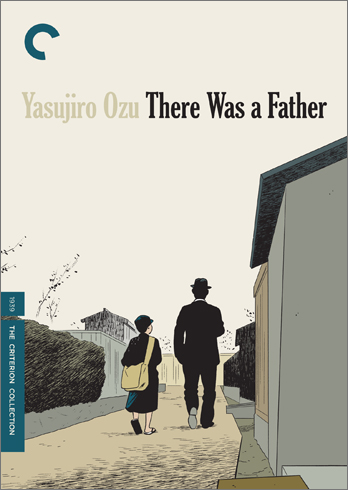
#526: There Was a Father

(Yasujiro Ozu, 1942)

Loved it. There Was a Father belongs to a mini-genre that I am consistently fascinated by: stories about fathers who are unable to compromise their moral integrity, leading to sacrifices for a family or child. In this case, the father is a teacher who feels obligated to resign when through no fault of his own a child under his supervision dies on a school retreat. The decision comes not from pressure from the family or his superiors, but from his own sense of guilt and the self-awareness to know he wouldn't be able to send his own child to be supervised by someone in his position.

Newly unemployed, the widower and father of one looks for work in other towns in order to pay his son's way through school. The only options open to him place him increasingly further away from his son, who is put in boarding school and works his way towards becoming a teacher, just like his father. This is the basic plot of the film, but really the movie is about the father/son relationship, both here and universally. The father in the film means to show his son through example how to live your life, but all the son wants from his father is love and affection. This struggle is a common one in narratives, particularly from the past hundred years, but the way Ozu depicts it is uniquely Japanese.

Conflict in Ozu's films continues to come from within, something that is anathema to Hollywood. The father does not hate the son for loving him above his duties to society, he just intends to guide his son towards a dignified life. The conflict in There Was a Father creeps up on you, avoiding rising drama or climax, much in the way life avoids those things. His work is so gentle that it can sometimes seem as if no one made an Ozu film - like a painting without brush strokes. Yet each film generates similar responses in similar sequence, and each story haunts you long after you finished watching it unfold, and in the end, There Was a Father - like all of Ozu's work - bears his unmistakable mark.