Showing posts with label 401-425. Show all posts

Thursday, April 18, 2013

#409: Days of Heaven

(Terrence Malick, 1978)

Since I began this journey, all three of Terrence Malick's 20th century films have been added to the Criterion Collection. This is a major coup for the series, but it's also great for movie fans looking for superb renderings of three of the best films of modern American filmmaking. Malick is undoubtedly one of the great narrative film artists this country has produced, and perhaps more importantly one of the few truly unique ones.

All three movies are classics, but Days of Heaven is the one that stands out as perhaps the most beautiful movie ever made. I first saw it when I was around 19 or 20 after being told by one person or another (or perhaps after reading in one book or another) that it was "The Greatest Movie Ever Made." I've probably watched only a handful of movies with such a lofty recommendation in mind (Citizen Kane of course being the old standby rite of passage), and it can often make a first viewing somewhat disappointing with such high expectations. Days of Heaven was not disappointing.

The film is mainly known for its cinematography, and this is well-earned. It's not entirely clear who deserves the credit for the film as shot (it's credited to Nestor Almendros, but Haskell Wexler apparently shot a great deal of the finished product), but what's on screen is stunning. Shot mostly by daylight, often with the sun just setting behind the horizon, Days of Heaven often has the kind of otherworldly glow for which the term "magic hour" was created. But even scenes not shot during this brief time of day can dazzle, like the shot which follows a girl as she jumps down a pile of hay, briefly catching the glare of the sun as it goes, or - most certainly - the climactic fire which finally and violently fully severs the connection between Shepard's magnate and his wife and her lover. The Thin Red Line argues that the true crime of war is against nature, but Days of Heaven surely believes that nature will endure, its gentle indifference saving it every time.

As Malick begins to put out films at a faster pace (his latest, To The Wonder, just arrived on iTunes), it's worth remembering how mysterious and iconic Days of Heaven seemed in the twenty years that separated it from Malick's follow-up. Like other relatively recent Criterion releases Repo Man and Vanishing Point, it seems impossible to imagine a major studio greenlighting and bankrolling Days of Heaven, and the film's powerful and beautiful rhythm is seldom matched by anything even Malick has made since. It's not only his best film, it's one of the few movies I think is unquestionably essential viewing.

One last thing: It's also worth noting that Ennio Morricone did the score, and its one of his most evocative and underrated works. Obviously best known for his Western work, Morricone here uses a similar Americana tinge to pull out the timeless and allegorical qualities of the story. Despite the fact that it is not featured as prominently as some of his other scores, I'd put it on the same level as those.

Thursday, February 28, 2013

#411: Berlin Alexanderplatz

(Rainer Werner Fassbinder, 1980)

Episode 1: Oh, Jesus, this could be a long trip. We're only 2 hours in and I already know I have to watch 13 more hours of a man who raped one woman (who subsequently decided she liked it like apparently happens in quite a few movies) and murder another by beating her to death with his bare hands. This is the protagonist of a 15-and-a-half hour movie.

Episode 2: It's clear now that this is really more of a season of, say, an HBO show, as the story has a nice arc in this episode similar to the previous one. So I guess really Franz is not so different from Tony Soprano, and he does want to go clean. Obviously it's not Fassbinder's intention to glorify what his character has done - and I doubt all of this is going to end very well for Franz - but this sort of thing is a lot easier in a book (or even a regular-length movie) than in a massive epic which revolves around one protagonist.

Episode 3: I had very little idea what the hell was going on in this episode. In fact, I had to go to Wikipedia to read the synopsis to make sure I had gotten the necessary info - turns out I had understood the broad strokes, it just seemed like there was a lot more going on under the surface than there really was. The whole interaction with the woman in her house was very strange - I couldn't quite understand if he had indeed had sex with her or made it up or what. And then when leaves at the end it seemed like he was making a bigger deal out of it than it was. That other guy was a real sleazeball, though.

Episode 4: What the fuck. This was dull as shit. I'm starting to get really worried that I have to watch ten more hours of this. How is this an hour long?

Episode 5: Lina appears to be gone, which is odd, but this episode was loads better than the previous one - in fact, it might be my favorite up to this point. The story is kind of strange and a little unbelievable - who is to say all these women are going to be attracted to both of these men anyway? Actually, why are they attracted to either one of them at all for that matter? Do women have extremely slim pickings in pre-WWII Germany? Still, it's nice to have an actual plot after the last episode, and I enjoyed Franz's arc and the way he handled everything, even if he is still pretty damn unlikable. I'm six hours into this thing and I have yet to really see why this needs to be so long or what people see in it. It's so intently focused on this guy who is totally nowhere that I wonder if I'm just missing a lot by not knowing much about German history between the World Wars. So far there have been some Nazi references (along with a reference to this guy - I think at the end of episode 4 - who I had never heard of before and I find pretty interesting), but nothing that really stands out.

Episode 6: We seem to be getting into a little more plot here, and it looks like Franz will be heading back into crime if I'm not mistaken. His inadvertent association with a robbery all seemed a little too ridiculous to be entirely behind his back, but I do think he is still trying to stay clean. I will also mention that I had a bit of the same reaction to this episode that I had to episode 3, which was that I was pretty sure I wasn't following what was going on, but looking back I got all the essentials. This is certainly a very dense work that is a reflection of its source materials and its ambition - I just wonder if the surface story is appealing enough to convince most people to take a second and third 16 hour journey.

Episode 7: This felt like a transition episode. Franz has lost an arm, yeah, but all that really means is he'll be slightly fatter on his right side for the rest of the series. Really, this feels like the turning point where Franz tries to hold off from descending back into his previous lifestyle and eventually succumbs in the good old red light district, which is rendered here as a kind of Pirates of the Caribbean meets Douglas Sirk aesthetic (only, you know, more prostitutes). I'm more intrigued than I have been at the end of previous episodes, but I'm not on board yet.

Episode 8: I hate this. Seriously, what am I doing with my life? Why did I watch this? Can someone tell me what happened in this episode that makes it need to exist? Why does anyone like this movie? What is happening?

Episode 9: You know what would be a good idea? They should show the murder that Franz went to jail for more. They should show it over and over. That would be good.

Episode 10: So this one was at least moderately interesting. The dynamic between Franz and Mieze is getting more complex, and the way he handles her new long-term client is engaging and somewhat suspenseful knowing what we know about his ability to inflict damage on his women. But I have a hard time believing anyone would think episodes 8-10 (and I suspect 11, too, since this didn't really end with a clean cut) wouldn't be better condensed into one hour - perhaps even less. It's been a long Criterion journey to get to this film, but through 450-some posts I never once suspected that most people who liked a movie did so out of obligation or pretense. But I am honestly at a loss to explain why this film is so well-liked, or really why anyone would like it. When compared to other Fassbinder, it feels lazy and largely incomplete. I'm certainly going to reserve my final judgement until after the notorious epilogue, but at this point I'm not convinced anything can be worth the hours I've spent on this.

Episode 11: Somewhat better than what's come before in that things actually happened, but the big climactic scene was so horrific and awful to watch that I hate to praise it any more than previous episodes. Perhaps following a character like Franz in a book can be bearable, but once you've seen the things his character does to women, it's hard to care at all about the minutiae of his life. This was also the episode where the homoerotic undertones of Reinhold's and Franz's relationship became most apparent. This is still quite the chore.

Episode 12: The second half of this episode, in which Mieze and Reinold walk through the woods, culminating with her murder, is superb filmmaking of the highest order. It also makes absolutely no sense as a television program in the early 1980s, when broadcast technology must have rendered some of the shots virtually indecipherable. It's the best indication yet of just how poorly this must have come across on the small screen before HD and screen sizes that went beyond 30 inches. I wouldn't say the last 12 hours before this were worth it, but I am glad I watched this scene. Still, the characters' motivations are so unbelievable - I really have a hard time understanding how Mieze could have been so stupid as to think she could use Reinold to get information without him wanting something in return, and I don't understand why she would be attracted to Franz in the first place. Most of the interactions in this movie remain a bit of a mystery to me.

Episode 13: Most of this episode could be cut - I would say this could have easily been five-ten minutes of a typical film. Very little is gained by the increased running time except for more opportunities to have Franz say Mieze is dead over and over. This is a pretty disappointing way to end a 14 hour movie, but it's also quite indicative of the film as a whole - overlong, totally self-indulgent, and depressing in an insignificant way. I've heard a lot of interesting things about the epilogue, so I'm not completely checked out at this point. But I am thankful to have most of this ordeal over and done with. I've started reading just about everything on this film I can find online, and this article most closely approximates my own feelings at this point, both in its headline and its full text. I would love to talk to someone who found this film engrossing, or even worth seeing.

Epilogue: Um. OOOOOOOOOOOOkay. I'm not sure this could have been more German if they had tried. I had no idea what to expect going into this, but it was certainly just as weird as people said it would be. There were definitely some cool parts, especially as it related to pop music. But most of it is pretty indecipherable, and just as overstuffed with ideas as the previous fourteen hours were overkill.

Honestly, I don't get the appeal of this movie. I'm really hoping someone can help me out here. Why does anyone think this approaches Fassbinder's finest work (The Marriage of Maria Braun, World on a Wire, or Ali: Fear Eats the Soul), let alone surpasses them? It's just so long. So very very long, and unnecessarily so. And the idea that anyone would spend 16 hours with this unlikable, unappealing character is a total mystery to me. Has anyone ever watched this a second time? How can that be possible? That is nearly a full day of your life that you never get back.

The way women were treated in the film also really bothered me. I'm not necessarily calling the film itself sexist or misogynistic, but these moments just felt excessive and depressing. I like a lot of Fassbinder, I really do, but I'm just at a loss here. Obviously, at fifteen hours, it's not a film I'll be giving another shot, but I would like to come out of it with a greater understanding of what people see in it. I just don't have that yet. In fact, this is the first time in over six hundred and fifty titles that I've thought to myself "Do people just like this movie to say that they like it?" This is a question that typically repulses me, but here we are.


Monday, December 31, 2012

#406: Martha Graham: Dance on Film

(Nathan Kroll, 1957-1961)

Watching Martha Graham's works filmed here, Appalachian Spring and Night Journey, before I watched the documentary made first, A Dancer's Life, might have made me dismiss them as something I wasn't very interested in. Even watching these TV shows in chronological order (though the plays themselves are actually from the 40s), I was most taken by the behind-the-scenes look. But having been introduced to the process these dancers went through, their performances were really something very special. Although - similar to my feelings about other stage work - I'm not much of a dance enthusiast, there is a hypnotic rhythm to watching a dancer perform that is unlike any other artform - even singing. It might be the freest form of expression there is - which makes watching someone perform it at times almost as exhilarating.

What most struck me about these films was the time period they came out of. This was the 1950s, the supposed land of conformism. These are our grandparents now, the ones who led an artist's life when being an artist wasn't just another form of commodification, but an active rebellion against the social norms. Sure, being a modern dancer today requires a certain level of sacrifice - mainly because of how many people want to do it and how difficult it is to succeed. But in the 1950s, there wasn't a stepping stone to mainstream acceptance for these dancers. Yes, Graham danced at the White House and the company toured all over the world. But this was a pioneering accomplishment, one that led to the eventual embracing of modern dance within the mainstream art world. I'm not saying that there aren't artists today that challenge our assumptions or work against the mainstream. Rather, I think the very nature of becoming an artist was once social rebellion, but no longer.

Graham's two pieces here are quite impressive. The movement and stark, minimal stage design is immediately modernist, but the pure emotion of both the performances and the music prevent it from feeling dated. Though modern dance has obviously moved even further away from ballet than what is seen here (something Criterion is making more apparent by releasing Pina), this work still feels hyper-relevant and revelatory. Of the two pieces, I definitely liked Appalachian Spring more, both because of Copeland's now-classic score and the lighter (relatively) touch of the story and dancing.

The disc in general is impeccably put-together. Along with the three collaborations Graham did with Kroll, there are a host of extras, most impressively a documentary on Martha Graham made for American Masters and modern-day interviews with many of the dancers who are featured in the films. These people have excellent insights and are a joy to listen to, but they are primarily a reminder of how happy you can be when you follow your bliss. Their demeanors and general nature make it totally apparent. I'm not the audience for this set, so if I can get wrapped up in what's happening, I feel pretty confident that anyone with a passing interest in dance would be enthralled by this underrated and forgotten spine number.

Monday, November 5, 2012

#414: Two-Lane Blacktop

(Monte Hellman, 1971)

This movie was made by a Hollywood studio. Like, a real one! That gave them money and everything! I just want that to sink in for people as they watch Two-Lane Blacktop, a decidedly anti-Hollywood car movie that followed in the wake of Easy Rider's surprise box office success at the end of the 1960s.

Still, Two-Lane Blacktop makes Easy Rider look like Oliver!, and it's almost impossible to make a comparison between this film and a single other movie that has been released by a major studio in the last ten years in terms of tone and pacing (maaaaybe the Solaris remake, but even that is sci-fi - and needed Steven Soderbergh, James Cameron, and George Clooney to get made). There's little dialog from the two leads, the plot moves at a glacial pace, and the movie in general is much more about the feel of the film than anything it is saying.

This might be taken by a large number of people as an indication that the film is expecting you to fill in the gaps where they didn't bother to put any real meaning (a recent example of this that was moderately successful was Drive, which is better than its reception but not nearly as impressive as its reappraisal might imply). I think there's a lot to be said for the film being somewhat of a trend piece masquerading as a deep meditation on life, but I think this argument falls apart simply when you look at what kind of impact this film has had on people. Now, I'm not here to say that any movie's popularity inherently confirms its philosophical significance. But I think the way in which Two-Lane Blacktop is presented, the way it has been received, and the basic criticisms that might be leveled against it - not that it's shallow, but that it's too removed, too obtuse, and too of its time - fall apart when faced with its timeless appeal and meaningful place in the lives of both youngsters of the era and car nerds of any era.

On a personal level, however, Two-Lane Blacktop represents little more for me than an example of just how impressive the auteur infiltration of Hollywood was post-Easy Rider and The Graduate. As someone who has almost no interest in cars as anything other than something that can get me from place to place, hopefully without costing me too much money, the film would need to have done one of two things: introduce me to a world I know nothing about or deliver compelling characters that I would care about on a universal level. The film's zen-like approach to these two elements make these goals impossible.

Thursday, October 25, 2012

#404: Robinson Crusoe on Mars

(Byron Haskin, 1964)

It would be easy to compare Robinson Crusoe on Mars to similar dated sci-fi in the Collection like Equinox and the Monsters and Madmen boxset. And in many ways, this would be an apt comparison: there is low and high art in all of these films and the passion of their creators shines through very clearly. They all work on two levels, since they could just as easily appeal to an eight-year-old (at least one whose senses haven't been dulled by the modern bend towards bright flashing lights and non-stop inanity) and a thirty-year-old cinema nerd - though of course it's arguable if these are different people I've just described.

Yet Robinson Crusoe on Mars, despite its creaky name, is something different from those other films. In fact - although its plot is directly cribbed from a well-known and very straightforward story - its visuals and pacing are more reminiscent of a different kind of sci-fi film made just a few years later: 2001: A Space Odyssey. Although that film's technological predictions turned out to be wishful thinking, this film's visual palette has only been surpassed by the reality of what we've seen beamed back from light years away. Robinson Crusoe on Mars is a small movie in human emotion and scope - a tale of one man and his loneliness. But visually, this is one of the great epics of sci-fi, a stunning and cannily re-imagined portrait of space and the red planet for the technicolor era. There are moments here that took my breath away, in all that phrase's purple glory.

At this point, Robinson Crusoe on Mars is the final movie of this type that I have to watch in the Collection (though Island of Lost Souls hails from a related genre). The inclusion of such films makes the Criterion umbrella both broader in scope and more legitimate as an arguable "canon" of film. It is films like this that had  a direct influence on the filmmakers who transformed American cinema in the 80s and 90s (for better or worse), but they also stand on their own as works of art. Robinson Crusoe on Mars is the best example of this in the Collection. This is a must-watch for any lover of the visual spectacle of cinema.

Thursday, October 18, 2012

#415: The Naked Prey

(Cornel Wilde, 1966)

The Naked Prey is a wholly improbable, totally outdated bit of pulpy fun. This is assuming you can get over the absurdity of the basic premise, which assumes that our precious hero is not only such an outdoorsman that he is able to withstand the harsh African wilderness with nothing but a handful of items, he's also better at hand-to-hand combat than African warriors that have trained for their whole lives. This also assumes you aren't looking for much character development (or even names), and your need for story is limited to "man runs for life."

Then of course there are the racial politics, which are... interesting. The Naked Prey isn't an inherently racist film, though I do think some of the leaps of logic needed to fully engage with the film depend on an assumption of mental if not moral superiority (it doesn't help, either, that the film was financed by the South African government). It reminds me of the term "colored" - it's not necessary an offensive term, but it's anachronistic status forces a reminder of the less enlightened times from which it is native. The Naked Prey might not be overtly racist - in fact, Wilde goes out of his way to have his character save and befriend an African child, who then saves him in return. But the film would never be made today in its current form - a muddy indication that something isn't quite right here.

All of this sort of adds to the historical appeal of The Naked Prey. Because the film itself is so primal - both technically and textually - the idea that the cultural subtext might highlight something darker about the 1960s or about cinema's depiction of black people underscores its blunt immediacy. It makes for a fascinating viewing that helps fill the void between the many leaps of logic.

The Naked Prey was recently the recipient of a bit of heat thanks to an episode of Mad Men where Peggy went to see the film. It's no surprise that a show about male identity would reference this masculine manifesto, but I doubt too much should be read into it beyond the basic connection Weiner and crew (most of whom were kids when The Naked Prey ran on TV) have towards material of that era. That's the thing about the film - every time you think there's something more to it, it stays almost frustratingly - but admirably - simple. Bringing this film to the Collection was not just a case for more exposure (it had yet to be released on home video), it was almost certainly a play for the more idiosyncratic side of filmmaking, a world of cult followings and quirky one-offs that can never be duplicated.

Wednesday, July 11, 2012

#405: The Threepenny Opera

(G. W. Pabst, 1931)

As I've mentioned before, musicals are not my thing, so it takes a lot for me to really connect with one. Unfortunately, despite its many charms and obviously impressive visual qualities, The Threepenny Opera did not reach this threshold.

I'm not really sure why this is the case. I enjoyed Pabst's other Criterion entry, Pandora's Box, much more than I expected to, while the German expressionistic style was put to great use in the early talkie years with films like M. Both Pabst's personal style and the larger aesthetic of German filmmaking are apparent here, in a film based on the hit opera that spawned the jazz standard "Mack the Knife." And there's great sly humor here from the corrupt mayor, the bitter father, and the various criminal underlings. But the film takes some time to get rolling, and the sets felt small and stagy. It's also weird to hear people talking in German about being English, but it's not like American films haven't sufficiently avenged this quirk. It's just not for me, I guess.

Saturday, July 7, 2012

#410: Under the Volcano

(John Huston, 1984)

If Wise Blood is Huston late-era artistic manifesto and The Dead is his passing of the torch, Under the Volcano is his catharsis, the final unloading of the themes that had bound him for five decades as a filmmaker. Fittingly, he chose Mexico for his grand statement, the site of arguably his greatest movie, The Treasure of Sierra Madre. But equally perfect is his choice to cast Albert Finney in the lead role. Finney is both the perfect stand in for Huston's father's characters from his earlier films and a great actor - one of the greatest, if I may say so. His performance here is flawless, which says a lot considering the fact that he is onscreen for nearly all of the film's running time and drunk - probably the most difficult physical state to play convincingly - for even more of it.

Like Huston's other two literary adaptations in the final years of his career, Under the Volcano was long considered unadaptable because of the vast stretches of inner-dialog. Yet these are almost always the most interesting adaptations to see because a lack of any clear path to the screen forces a screenwriter and director to make conscious cinematic decisions to steer the film away from its original prose. Under the Volcano is partially appealing in this regard because of its economy of scale, as the film slices out characters and more complex themes from the source text. But it's mostly notable because of the way the novel has been finessed into Huston's oeuvre and made his own. The obvious metaphor of the titular volcano is the brewing global crisis of World War II, but here the spectre is more clearly death, particularly self-destruction. As Finney's character hurtles towards his fate, the themes of the film and his final moments become one, and the burden of a career wrestling with the greatest questions in cinema is unloaded in the rain.

Monday, March 19, 2012

#401:Night on Earth

(Jim Jarmusch, 1991)

I realized the other day that now that I have seen this film, I've seen every Jim Jarmusch movie except his most recent, The Limits of Control (which was very poorly received). This was a bit surprising to me, as I don't consider myself to be a huge fan of the director. In fact, Night on Earth is probably my favorite of his films, one of a number of movies in his career which features a series of short pieces loosely connected through place or theme (I watched another, Mystery Train, earlier this year). Night on Earth's gimmick is that every episode revolves around a taxi driver and a fare they pick up. They also all happen at the exact same moment in five different cities across the world: Los Angeles, New York, Paris, Rome, and Helsinki.

It's inevitable with films like this that the viewer will compare the quality of each segment, but it's only the films that hold together that are able to transcend this game. Night on Earth did that for me, not just because I enjoyed all five of the segments but because their tones are all so different that they are able to exist as pieces of a whole instead of just vaguely connected vignettes (as was certainly the case with Jarmusch's fun but wildly uneven Coffee and Cigarettes). Though I liked the Los Angeles segment less than the others, each piece balanced the quirkiness of Jarmusch's POV with a well-earned emotional kick - whether it was comedic as in the Rome segment (where Roberto Benigni is actually funny!) or tragic as in the Helsinki finale. Though the ending of the Paris segment in particular is somewhat gimmicky, each story relies almost entirely on the ability of its inhabitants to connect with each other within the confines of the cab in simple and unassuming ways. The randomness of the contact these characters experience within each story serves to conversely reinforce the strength of the connection between all of the characters in the film, regardless of their location. Though this might seem to expand beyond the scope of the film's unambitious reach, the message is one of true humanism, binding all inhabitants of the night.

Jarmusch's work can certainly be like that: quietly impactful. But I think what surprised me most about having seen virtually his entire catalog was the idea that all these little movies I had caught here or there added up to such a staggering presence in American independent cinema. Jarmusch's films remind me that American film doesn't just rely on the overblown ridiculousness of Hollywood and the flashy artistic statements of auteurs like Tarantino and PT Anderson. It's actually not impossible to amass a body of work about human-level characters doing quiet things that, taken as a whole, speaks to the broad potential of the moving picture just as well as any ambitious epic.

Friday, December 16, 2011

#413: Drunken Angel

(Akira Kurosawa, 1948)

Drunken Angel is the second early Kurosawa film I've watched in recent days, the first being Stray Dog. The two movies share a lot more than their director and leading man, Kurosawa and his favorite leading man Toshiro Mifune. Their post-war Tokyo settings make the perfect backdrop for noir that is distinctly Japanese, and each film is about the lead characters struggling to reconcile their position in life with the person they want to be.

Structurally, the biggest similarity is the fight that becomes the final confrontation in each film. They are both shot impeccably and deliberately, but the fights themselves are clumsy and realistic. Mifune's movements seem desperate and authentic, something we so rarely get to see any more now that fights must be slick and impressively choreographed (ironically, this trend comes from Eastern films).

But despite these similarities, I enjoyed Stray Dog much more. Part of this is the noir-styled mystery at the heart of that later film - it's more exciting and engaging than the melodramatic relationship between the two leads here that is the core of the film. But I also really loved seeing Kurosawa execute a film in such an experimental fashion in Stray Dog. That movie just seems so much more illuminating with regards to Kurosawa's developing voice whereas Drunken Angel feels more like a talented director making a movie before he had an identity. I enjoyed Drunken Angel, but it's Stray Dog that in my opinion kicked off Kurosawa's renaissance.

Saturday, August 13, 2011

#420: Le Bonheur

(Agnés Varda, 1965)

I think I love Agnés Varda and Le Bonheur is a great example of why. Despite the sad scarcity of female directors relative to the general population (is there any other art that is so one-sided gender-wise?) there is an enormous range of sensibilities within their ranks, from Mimi Leder and Kathryn Bigelow to Catherine Breillat and Jane Campion. While it should hardly be the responsibility of a female director - or any Western director who deviates from the typical white male identity - to "carry the torch" for their kind, the women who most remind me of what film is missing by tilting too far towards men are those that bring a specific female perspective to their work. I can't think of a single director who personifies the potential this perspective can provide better than Agnés Varda.

What is so remarkable about Le Bonheur is that the film does not present the feminine perspective in the traditional sense - by presenting a female protagonist in a uniquely female world - but instead provides a new take on a conventional male protagonist in a premise that is hardly new territory for male-dominated cinema. How many movies have been made about infidelity, specifically (though not exclusively) male infidelity? Ironically, many of those films took a moral stance that ultimately sunk the protagonist, while Varda's supposedly "feminine" take on the story is in some ways the masculine ideal - sharply satirized, of course, and sporting one "speed bump" along the way, minor or major depending on whom you ask. The final sequence (spoiler, of course) of Francois's replacement for his wife caring for his children while she remains almost entirely off camera, devoid of individuality - or even being - is one of the most savagely funny takes on gender dynamics I can think of in film.

I recognize that other people see a second side to Le Bonheur, one that isn't satirical and might even condone Francois's actions. I simply don't see it within the film, and tend to think this uncertainty is because Varda chooses to avoid confrontation, even placing Therese's death offscreen - Fat Girl, this is not. Without that big moment where Francois gets his comeuppance - and particularly because Varda scrubs her film clean of any dirt - Le Bonheur seems like a commercial for sunflowers more than it does a biting look at domestic gender dynamics. We're looking at Francois through his fantasy lens where all of his rationalities make sense, all of his needs are satisfied, and every day is 70 degrees and sunny. Welcome to paradise, Francois, pay no attention to the woman behind the curtain.

Thursday, August 4, 2011

#416: Miss Julie

(Alf Sjöberg, 1951)

It's nice to know Bergman doesn't have a monopoly on depressing Swedish films about the overbearing presence of God. Of course, for most viewers it's nice to know Swedish films that weren't directed by Bergman exist at all, so dominant is the filmmaker in the world cinema psyche. This might come as a surprise to people in 1951, when Miss Julie won the top prize at Cannes and Sjöberg was still in the prime of his career, towering above Bergman whom he had collaborated with in the 40s and who had yet to have a breakthrough international hit.

Adapted from the play by August Strindberg, Miss Julie is one of the most rewarding examples of the art of transferring stage to screen. Sjöberg's camera is highly stylized and ambitious - the director uses extreme close-ups, action on multiple planes, and various in-camera tricks to bring Strindberg's immobile play to cinematic life. It still wouldn't be difficult to see that the film was adapted from a play, but Sjöberg's choices illustrate many of the most interesting dilemmas - many of which come down to the essential question to expand or not to expand.

Despite these interesting intellectual elements - not to mention the film's appealingly melodramatic plot - Miss Julie falters in its misogynistic backbone, made far too blatant by the final shot of Julie's mother's picture hovering over the tragedy (her character weirdly reminded me of the vaguely homophobic character Mrs. Danvers from Rebecca). Miss Julie is a better film than its younger cousin, Bergman's infinitely lighter Smiles of a Summer Night, but it's no surprise why the later film has retained its profile, while the intense, impeccably made, but very dated Miss Julie has taken its place next to similarly forgotten Swedish tragedies.

Friday, July 8, 2011

#425: Antonio Gaudí

(Hiroshi Teshigahara, 1984)

Criterion says this film is "Less a documentary than a visual poem," and it's not an overstatement - there's barely any dialog or even action throughout its barely feature-length running time. That's ok when the images of the film are works by Gaudí, shot with an enormous amount of reverence and skill by filmmaker Hiroshi Teshigahara (whose 3-film Criterion boxset I have yet to dive into). I'm not going to go so stereotypical as to say that his presentation has an Eastern austerity, but I do think the way the work is presented gives the impression of an outsider struggling to understand not just an artist's output, but the culture which produced such an artist. There is a love of Gaudí's buildings, but also a sense of mystery and otherness - Teshigahara manages to make his subject exotic without qualifying it as a novelty.

One interesting thing about the film was how little it reminded me of my own first-hand experiences with Gaudí's buildings. Rather than evoke the same emotions I had while traveling through Barcelona, Teshigahara's presentation emphasized the strange and oddly beautiful elements of his work. Rather than simply documenting Gaudí's work, the film was conveying the experience of seeing the buildings that was specific to Teshigahara. This is a sharp reminder of the subjectivity of film and the immense control a filmmaker can have over both his or her subject and the audience.

The 2-disc set has an enormous amount of material surrounding the documentary, including more discussion of Teshigahara's personal experiences around Gaudí's work. This makes the entire set a rich and fascinating look at the crossing point of two artists from different eras, different cultures, and different mediums. The film itself is conversely minimalistic and contained, but through the simple presentation of architectural landmarks, it may speak more to the form than the content.

Sunday, April 3, 2011

#424: Mafioso

(Alberto Lattuada, 1962)

Mafioso is a supremely interesting movie, a comedy of manners mixed with a unique perspective on the mafia narrative. As a depiction of Sicily in the early 1960s, the film is a fascinating look at the relationship between north and south in Italy, and the social and political climate which allowed the mafia to flourish. It's also a sweetly funny family comedy of culture clash and a moving portrait of an average man caught up in his responsibilities.

The film begins with Nino making the rounds on the factory floor where he manages workers. Nino is middle management and loving it, the kind of guy for whom a beautiful wife, two kids, and a steady slot at a company has given him everything he has ever wanted in life. But when he takes a vacation to his hometown in Sicily, he must contend with his family clashing with his Northern wife and a much more sinister proposal from the local kingpin.

The scenes with Nino and his family are both funny and illuminating. In much the same way that most Americans group all Latinos together - ignoring the fact that international borders, skin color, and socioeconomic background make the political landscape in America south of the US far from unified - it is easy to forget that even a country as small as Italy has enormous cultural variations within its borders. The most significant of these is the division between the lighter, more European northerners and the darker, more Mediterranean southerners. This is especially true of Sicily, where many residents to this day consider themselves Sicilian far before they consider themselves Italian. Despite the fact that we never leave interiors in Nino's Milan, the contrast between his adult home and his childhood one is stark: the modern Nino and his family have been thrown into old Italy. Everyone knows everyone else in old Italy, and Nino's family stares at his wife when she lights up a cigarette - not because it bothers them, but because they have never seen a woman smoke before. As in every high/low cultural showdown, Nino's parents consider his wife a snob, while his wife considers them judgmental and mean. It's not a new dynamic, but seeing it come alive with such vivid characterizations and detail about a place as fascinating as mid-century Sicily makes it feel not just fresh, but wholly unique.

The mafia element of the film is just as interesting. Any depiction of the crime syndicate which originated in Italy has the spectre of The Godfather hanging over its head, so it's impossible to know what it was like to see Mafioso a decade before Marlon Brando stuck cotton balls in his mouth. But Mafioso reminded me less of that film and more of some of the most enjoyable subplots from The Sopranos. Many of the most interesting moments in the show came from characters who were outside of Tony's inner circle, the men and women who struggled to adjust to the inevitability of the mafia invading their lives. It is constantly clear in Mafioso that it would be impossible to avoid the don of Nino's town, that in fact everything that is done is informed by his presence. Despite the fact that (spoiler) we watch Nino kill someone in cold blood, we feel only sympathy for him because the possibility that he could have refused seems by this point of the movie to be almost absurd and completely out of the question.

Much like Gomorrah argued that the Comorra syndicate infiltrated every aspect of life in Naples, Mafioso is a heartfelt depiction of the far reach of the mafia into every element of Sicilian life to the point where their very identity is informed by it. The connection between the two stories - the seemingly antiquated day to day of small town Sicily and the global conspiracy of the island's criminal network - might seem tenuous if it wasn't for the way Lattuada uses humor and ultimately tragedy to inextricably link the two, just as he links the international reach of Nino's mafia past to his industrial present. For Sicilians, and perhaps for everyone, it is impossible to outrun your identity.

Friday, February 18, 2011

#402: The Milky Way

(Luis Buñuel, 1969)

Another meandering exploration of religion that wanders through absurdity, satire, and various moments of heresy, Luis Buñuel's The Milky Way had basically the same impact his previous films dealing with similar issues had on me. Not much.

Yeah, it's funny when a reflective and seemingly intelligent priest turns out to be an escaped mental patient. And I honestly lol'd when Mary told Jesus not to shave his beard. But I actually had a hard time even finishing The Milky Way. The whole film felt like a weird amalgamation of Buñuel's typical thematic and psychological concerns and a weird facsimile of the counterculture movement which surrounded its release. It also struck me as unfocused, the kind of film only a great director can make because anyone else would have been told "no." Reading the essays on the film didn't get me much further, and while I wouldn't say I've loved any Buñuel film I've watched so far, this if the first one I fail to see a real case for being included in the Collection. It's not that I hated it, it just felt slight, and I've yet to see a good case made for why I am wrong.

Monday, October 25, 2010

#412: Sawdust and Tinsel

(Ingmar Bergman, 1953)

Circuses are not my favorite, but Sawdust and Tinsel is about a circus the way La Strada is about a circus, which is to say not much. In fact, the films share a lot in common, as both feature rundown circuses struggling to get by and gruff older men attached to younger women. Of course, those women aren't exactly the same, and Bergman's film is more about issues of identity and jealousy than loyalty and love. Fellini was a fundamentally more upbeat director than Bergman (which isn't saying much) and this film, like many of his films, ends up being extremely sad and emotionally wrenching. However, Sawdust and Tinsel isn't a masterpiece, but instead a film in which a great director comes into his own. This is Bergman's 13th film, but it feels like a partially formed version of many of his films to come, a toe dip, if you will, into the themes he would continue to explore throughout his career. Because of this, it's an interesting historical artifact, and a reasonably strong film. But it would not be in the collection if it had been made by anyone else.

Thursday, October 21, 2010

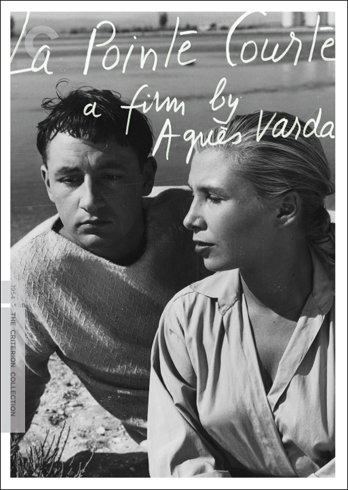
#419: La Pointe Courte

(Agnès Varda, 1955)

Easily one of the greatest female directors of all time, Agnès Varda is also (not coincidentally) one of the most underrated directors of all time, and I say that having only seen two of her designated classics (the other, Vagabond, is sitting on my DVD player) and a couple of her later works. Cléo From 5 to 7 is a masterpiece, one of the great films of the New Wave, and an extremely influential film. But it's this movie - which I actually didn't particularly enjoy - that is (or rather, should be) her claim to historical significance. La Pointe Courte was made in 1954 (it was released in '55) five years before The 400 Blows became an international sensation and reinvigorated French cinema. This movie isn't as good as that one (just my opinion), but it's every bit as revolutionary, not just because it uses amateur actors shooting on location detailing everyday life, but because it attempts to introduce a new language of film, a new way of looking at narrative.

It's the kind of movie that can't help but bring up serious issues of gender. Varda tells her story in such a confident and sprawling fashion that, had it been directed by a man, I have no doubt that it would be considered "ballsy," "defiant," and a rejection of conventional French film in many of the ways that the work of Truffaut and Godard were in the ensuing years. But the combination of male bravado (in personality rather than filmmaking, for inarguably La Pointe Courte is not a timid movie) and the general sexist tendency to move towards the biggest presence in the room then and even now has prevented most people from acknowledging the film's impact on the history of the artform. Certainly, statements like the one Godard made regarding Truffaut's first film - in which he basically said we and our swinging dicks are coming, and don't get in our fucking way - had a certain ability to transfix the cinema crowd at a time when they were looking for something different. So it's not the fact that La Pointe Courte didn't have the capacity to shock audiences and upend their preconceived notions about French cinema, but rather that Varda was most likely uninterested in crowing about it, and unlikely to be viewed as the white knight to the rescue of a film culture that was treading water. (As an aside, there is also the historical context in which the film was made, of course, that had less to do with gender. The year before La Pointe Courte was made, Max Ophüls made one of the greatest films of all time in France, The Earrings of Madame De... and Jaques Tati introduced his timeless M. Hulot in M. Hulot's Holiday. Surely, French cinema was far from dead. By the time Truffaut and Godard finally decided to roll out of bed and make a film, the time was right for revolution.)

Despite my soap box, you may have noticed that I said I didn't particularly like La Pointe Courte. It's not that I think it's a bad film, but instead just one that didn't especially move me, and one with which I had a hard time connecting. Like Last Year at Marienbad - which has a direct connection to the film, as Alain Renais was the editor here - the movie turns a simple story of a relationship into a dream-like exploration of human interaction, complete with stilted line readings and expressionistic framing. And like Amarcord, the film is more a portrait of a town and a way of life than a specific person or persons with one distinct storyline. But unlike either of those films, it doesn't concern itself with issues of cinema - memory, perception, spacial and visual construct - that I find perhaps the most intriguing elements of each of those films. Varda does play with the balance between narrative film and documentary formats, but it almost feels too seamless to care. Ultimately the film might be too much what it is for me to feel pulled towards any element but the story, and it was a story that didn't impact me.

I don't think you have to love a film to acknowledge its historical importance, and the importance of this film to the coming French cinematic landscape just seems unavoidably huge, towering above any other film I can think of. So the fact that it's so little known and seemingly little loved (it didn't even warrant a separate release from Criterion, being placed instead in a Varda boxset) seems like a grand travesty to me, and one of the glaring examples of women in cinema being pushed aside by their bigger, louder counterparts.

Sunday, March 28, 2010

#422: The Last Emperor

(Bernardo Bertolucci, 1987)

The most obvious flaw in The Last Emperor is that everyone seems to not only speak English, but communicate exclusively in it. There aren't many other flaws. The winner of best picture in 1987, The Last Emperor is a minor epic in scope (David Thompson calls it Lean-meets-Ozu, and I get that) but a major work in 1980s cinema. Watching it again, I was struck by just how luscious the cinematography is, how personal the depiction of the emperor is, and how understated just about everything in this movie is. It's delicate and focused where many historical epics of its time were weighty and overserious (Reds comes to mind). And the performances are all really excellent. A fine film.

A note on the Criterion controversy: The current blu-ray version of the film is in a 2:1 ratio, while the movie was traditionally shown in the wider and more traditional 2.35:1 ratio. Criterion claims that this was because the filmmakers (the cinematographer and the director specifically) claim that this was their original intention for the film. I have to agree with the masses who are disappointed in this decision. I believe movies should be seen in their original release version, and I highly doubt that, had Bertolucci wanted the film to be shown in this narrower ratio originally, it wouldn't have been shown that way. If they must, it would be acceptable to release both versions, but this would of course mean another disc to avoid sacrificing quality, which means more price. But in general, I believe once a film is released, that version belongs to the public, and should not be altered.

Thursday, February 18, 2010

#417: This Sporting Life

(Lindsay Anderson, 1963)

Most people consider this Lindsay Anderson's best film, a character portrait that reminds me more of a Cassavetes film than the average sports film. So if you haven't guessed it yet, that cover over there might be a bit misleading, unless I guess you take it metaphorically. See, the main character is only able to express himself through violence, something which often ends up hurting himself more than others.

Like Cassavetes, Anderson is an auteur in the truest sense of the word. His films are deeply personal, powerful in their vision, and expertly realized. But auteur directors can be extremely polarizing, and I didn't particularly connect with this film, just as I didn't connect with If.... Perhaps, just like that film, This Sporting Life is inherently British, seeped in class just as much as masculinity. But I think also the deep melodrama here fails to impact me on a personal level, and the movie reminds me more of other films I've seen (most notably the far superior Raging Bull) than of moments in my life.

Anderson's films have impressed me enough that at another point in my life I might be more inclined to return to them, but for now, I'll leave them be.

Friday, January 8, 2010

#423: Walker


(Alex Cox, 1987)

Ostensibly a biography of a man who ruled Nicaragua for a few years in the 19th Century, Walker is in reality an anachronistic highly political message film. I think I loved it.

Ed Harris plays the title character as a droll, fun-hating puritan, a man as confident in his beliefs as he is willing to abandon them when it suits him. Here, he is a stand-in for America. The film was shot in Nicaragua during the contra war with the blessing of the Sandinista government, and the obvious parallels between the two moments in time become literal when [click through for spoilers]